Ingredients
Equipment
Method
- Preheat your oven to 350°F (177°C).
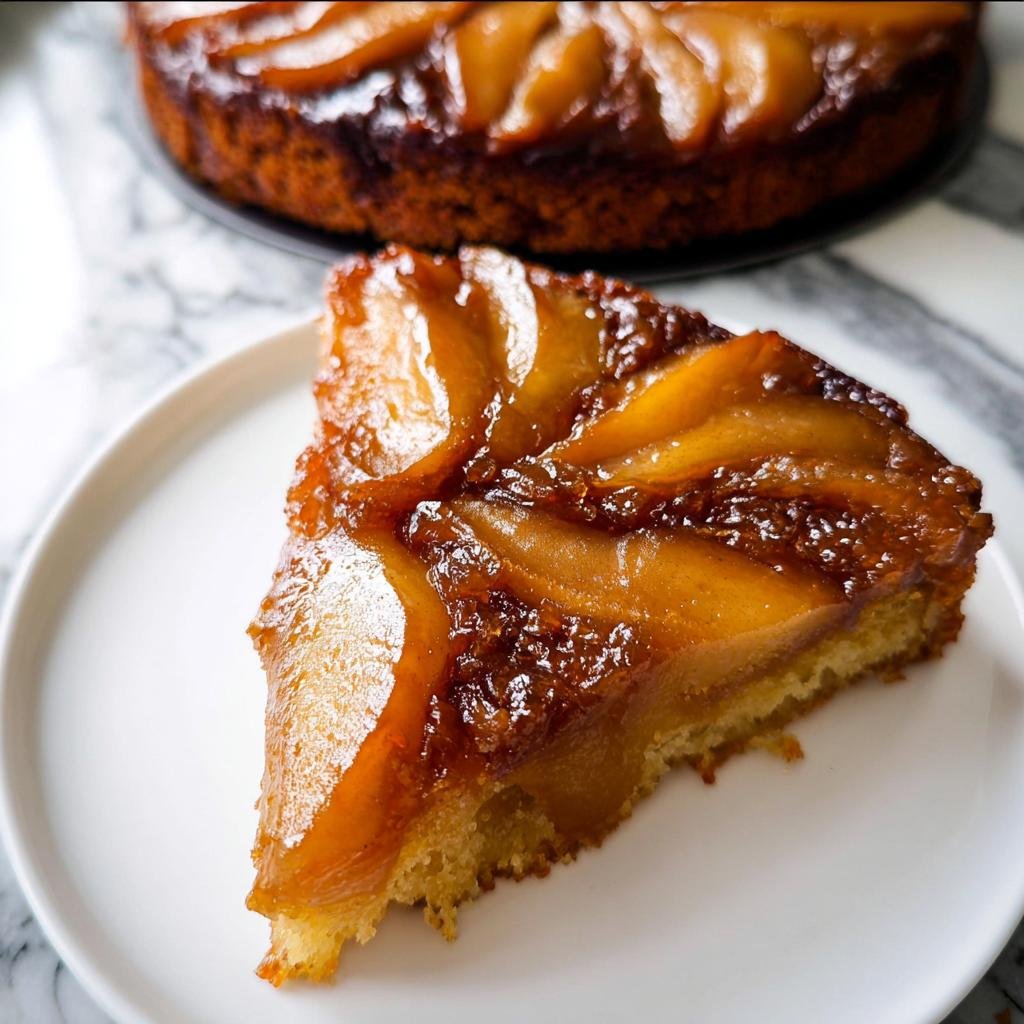
- Prepare the topping first: Combine butter and brown sugar together in a small saucepan over medium heat. Whisk occasionally until the butter has melted. Cook, whisking constantly, for 1 minute as the mixture thickens. Remove from heat and whisk in the cinnamon and vanilla extract. Pour into an ungreased 9x2 inch pie dish or round cake pan. Arrange the apple slices neatly on top, overlapping where necessary. Place the pan in the refrigerator for a few minutes while you prepare the cake batter. This helps set the topping's arrangement.
- Make the cake batter: Whisk the flour, baking powder, cinnamon, nutmeg, and salt together. Set this mixture aside.
- Using a mixer fitted with a paddle or whisk attachment, beat the butter on high speed until smooth and creamy, about 1 minute. Add both sugars and beat on high speed until creamed together, about 1 minute. Scrape down the sides and bottom of the bowl with a rubber spatula as needed. On high speed, beat in the eggs and vanilla extract until combined. Scrape down the sides and bottom of the bowl as needed.
- Pour the dry ingredients into the wet ingredients. Turn the mixer to low speed and as the mixer runs, slowly pour in the milk. Beat on low speed just until all of the ingredients are combined. Do not over-mix. You may need to whisk it all by hand to make sure there are no lumps at the bottom of the bowl. The batter will be slightly thick.
- Remove the topping from the refrigerator. Pour and spread the cake batter evenly over the topping.
- Bake for 40–46 minutes, tenting foil on top of the cake halfway through the bake time to prevent the top from over-browning before the center cooks fully. The cake is done when a toothpick inserted into the center comes out mostly clean; a couple moist crumbs are acceptable. Do not worry if your cake takes longer or if the cake rises up and sticks to the foil.
- Remove the cake from the oven and cool on a wire rack for 15 minutes. Invert the slightly cooled cake onto a cake stand or serving plate. Some of the juices from the topping will seep over the sides; this is fine. You can slice and serve the cake warm, but the slices will be messy. Cool the cake completely at room temperature before slicing and serving. Do not refrigerate the cake to speed up the cooling process because it could taste overly dense.
Notes
Cover leftover slices and store for up to 3 days in the refrigerator or 3 months in the freezer. Thaw at room temperature. Avoid freezing the cake as a whole because the topping arrangement does not thaw well.