
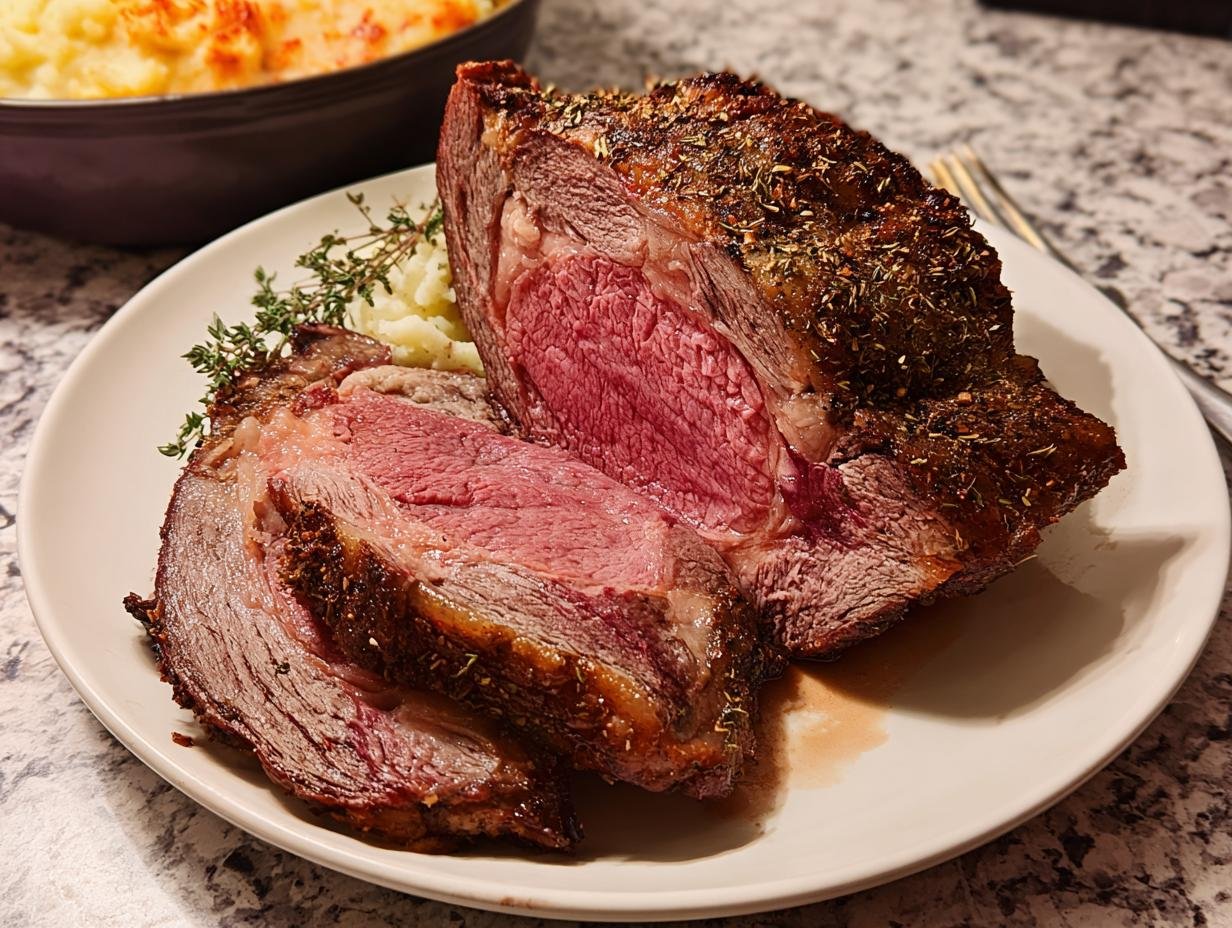
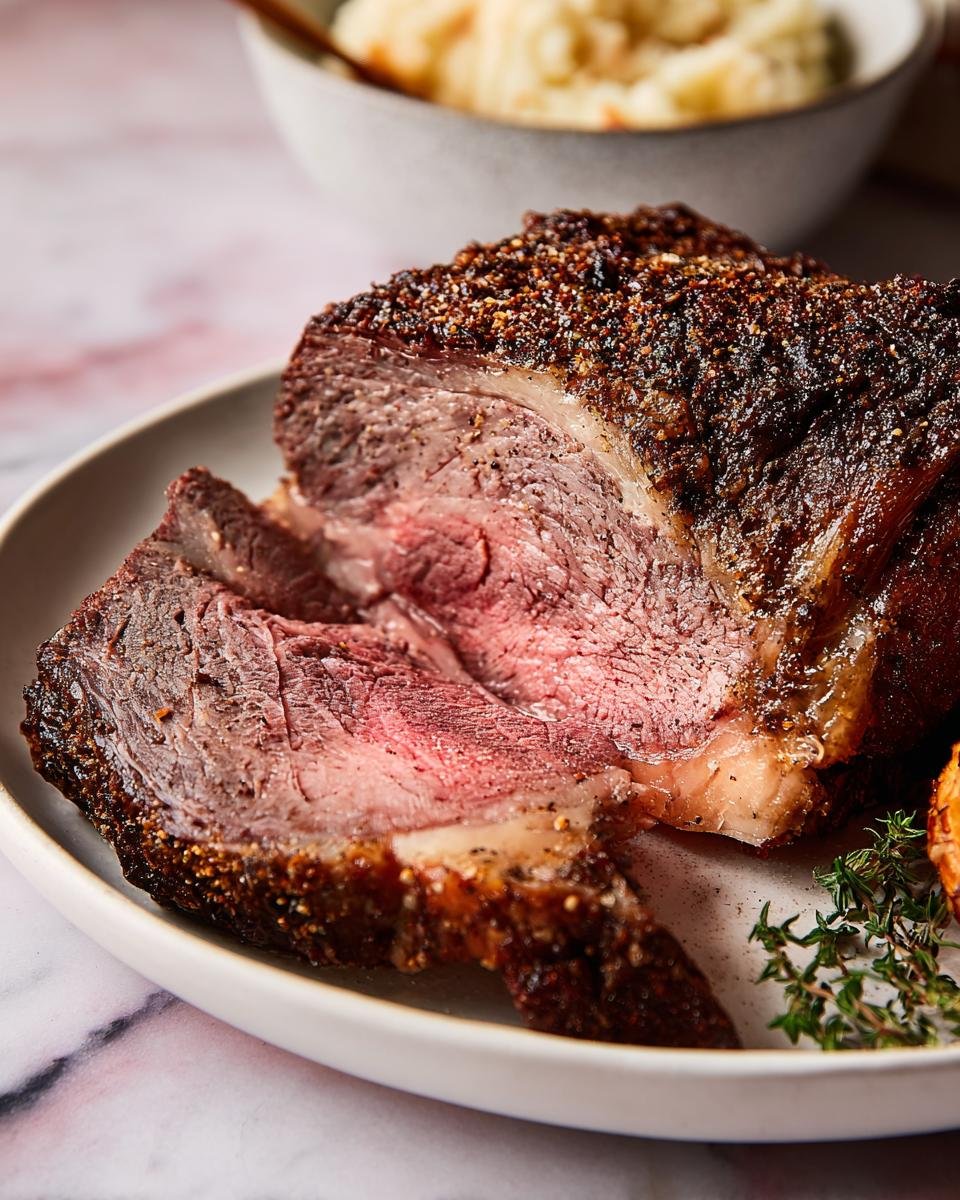
When you’re planning that big holiday dinner or NYE feast, nothing says “special occasion” quite like a huge, glistening roast sitting at the center of the table. It looks intimidating, right? But trust me, achieving that perfect contrast—a deeply seasoned, crusty exterior hugging a blush-pink, medium-rare center—is totally possible right in your standard oven. I still remember the first time I tested this recipe; I was so nervous, but once I followed the method step by step, the aroma filled my whole house! That moment, when I finally sliced into the meat and saw that amazing blush-pink interior, taught me that creating Restaurant-Quality Prime Rib at Home isn’t about fancy equipment; it’s just about knowing the right steps.
Why You Need This Recipe for Restaurant-Quality Prime Rib at Home
I know tackling a prime rib can feel like climbing Everest, but honestly, this method breaks it down so simply. You don’t need a fancy smoker or a decade of culinary school under your belt to nail this!
- You get that jaw-dropping, shatteringly crisp outer crust every single time.
- The interior is guaranteed to be a perfectly even medium-rare—no more grey bands!
- It doesn’t require complex techniques, just patience during the prep and resting.
- And frankly, serving this roast makes you look like a total culinary hero.
Pair it with some classic steakhouse sides, like my favorite Creamed Spinach Style, and you are set!
Essential Equipment for Restaurant-Quality Prime Rib at Home
Even though this is a show-stopping centerpiece, you don’t need a professional kitchen setup. What you do need, however, are two specific tools that promise success. Throw away any idea that you can ‘eyeball’ this roast—it’s too precious for guesswork!
First, you absolutely need a sturdy roasting pan. Think of it as the moat protecting your roast. The pan catches all those glorious drippings for your gravy later, and having deep sides keeps your oven walls nice and clean. It gives the roast enough space to breathe and brown evenly on the bottom, which is important when trying to get that great crust all around.
The Non-Negotiable Tool: Accurate Temperature Reading
If you buy only one thing for this recipe, make it a high-quality digital meat thermometer. Seriously, this is the difference between a culinary triumph and a dry disappointment. Prime rib is all about hitting that perfect internal temperature—think 125°F for a beautiful medium-rare. If you try to guess when it’s done, you are playing a dangerous game! You might pull it too early and have a raw middle, or pull it too late and end up with roast beef.
The best chefs rely on temperature, not time, and so should you. You need to insert the probe into the thickest part of the meat, avoiding the bone entirely. That quick, accurate reading is the secret sauce of all great roasting, and it gives you that professional confidence boost when you see the numbers lining up perfectly.
Ingredients for Your Restaurant-Quality Prime Rib at Home
Okay, let’s talk shopping! When you’re making something this luxurious, the quality of the main ingredient really, really shows. You simply can’t fake a great prime rib, so if you can splurge a little here, it’s worth it. We need a few simple things for the rub, but the star is the meat itself.
Remember, the best results come from the best product. Don’t be afraid to ask your butcher for exactly what you need. I love pairing this beautiful roast with some herby bread on the side, like these Rosemary Thyme Rolls, to soak up all those amazing juices!
For the Prime Rib Roast
This is the hero of the day. We’re keeping things simple here because the marbling in the meat does most of the heavy lifting!
- 5 Pounds Prime Rib, bone-in
The Flavor Rub Components
This rub is what builds that gorgeous, craggy crust on the outside. We use fresh herbs because the flavor difference is massive compared to dried stuff—trust me on this one! When you mix this up, take a moment to mash that garlic really well into the olive oil before adding the herbs; it helps make almost a paste, which sticks beautifully to the meat.
- 3 Tablespoons Kosher Salt
- 1/2 Cup Olive Oil
- 8 Cloves Garlic, mashed
- 3 Tablespoons Fresh Rosemary, finely chopped
- 2 Tablespoons Fresh Thyme, finely chopped
- 2 Teaspoons Onion Powder
- 1 Teaspoon Ground Black Pepper
Mastering Prime Rib Cooking Techniques for Restaurant-Quality Prime Rib at Home
Preparation: Tempering and Rub Application
Okay, let’s get this beauty ready to roast! That first step we mentioned—bringing the meat to room temperature—is absolutely essential. I usually pull mine out of the fridge about two hours before it hits the oven. This helps it cook evenly, which is key if we want that perfect pink center.
While it’s warming up, mix up that flavor rub we assembled. Make sure you mash that garlic well into the olive oil first; you want a smooth, fragrant base. Then mix in all those delicious herbs and spices. When the roast is tempered, pat it *super* dry all over with paper towels. Dry surface equals crust! Slather that paste all over the bone-in roast, making sure every inch is covered in salt and herbs. If you’re feeling organized, doing this the night before and leaving it uncovered in the fridge makes the crust even better!
The Cooking Phase: High Heat Sear and Slow Finish
This two-stage cooking method mimics what the fancy steakhouses do to get that epic crust and tender interior. First, crank your oven up high to 450°F. Place the roast, fat-side up, on a rack inside your roasting pan. Let it blast for about 15 minutes—this is your sear to lock in those flavors and build that crust. Don’t open the door, just let it sizzle!
After those 15 minutes, immediately drop the temperature down to 325°F. Now we cook low and slow until we hit our target temperature. For medium-rare (my personal pick!), pull it out around 125°F. Remember that low and slow approach? It really helps achieve beautiful, even cooking, making your Restaurant-Quality Prime Rib at Home a reality.
Resting: The Final Step for Restaurant-Quality Prime Rib at Home
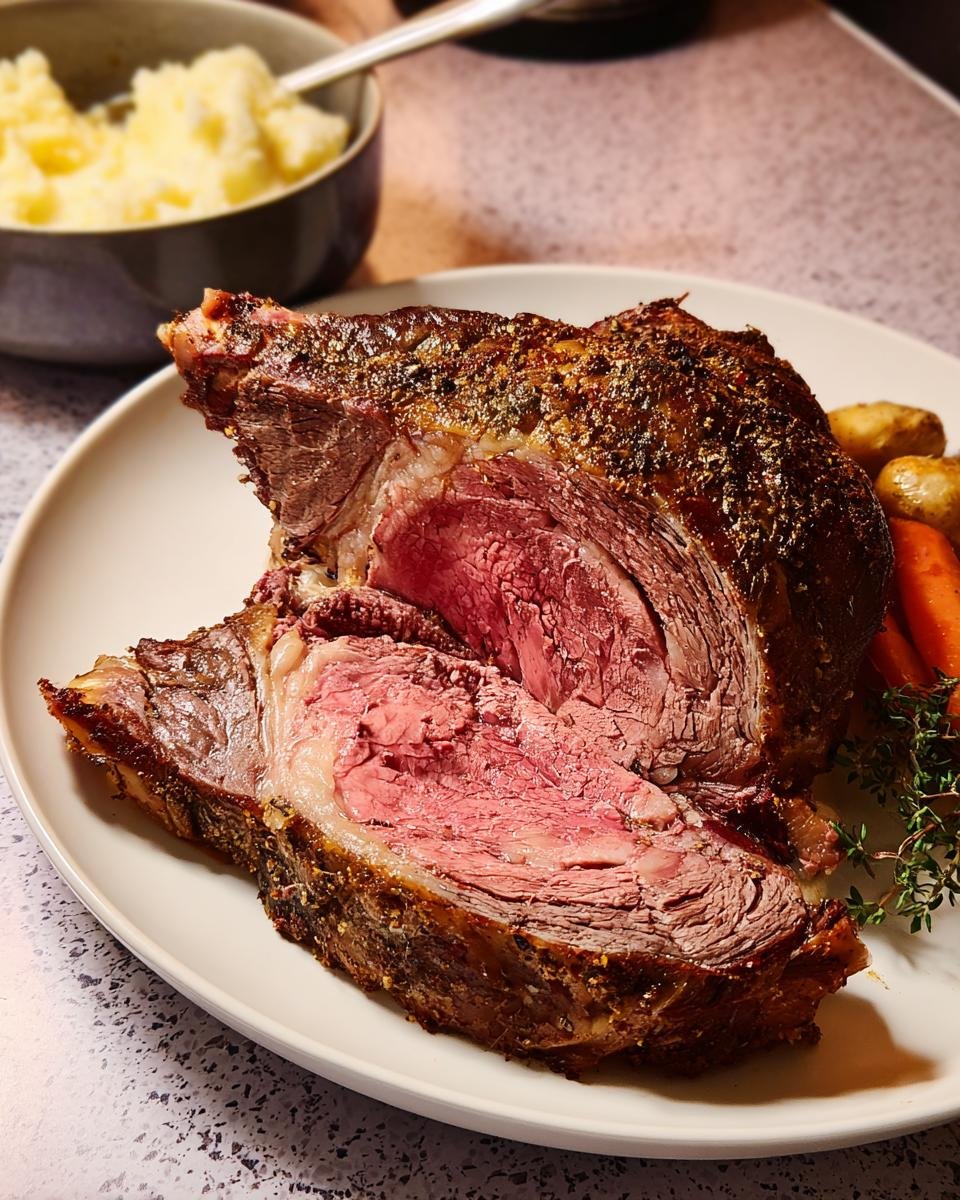
This is perhaps the hardest part because your kitchen smells heavenly, but DO NOT skip this! Once that thermometer hits your target temperature, pull that roast out immediately and tent it loosely with foil. It needs a full 30 minutes to rest. What’s happening here? While it rests, the internal temperature will keep climbing a few degrees (that’s called carryover cooking—super important!). More importantly, resting lets all those delicious juices settle back into the meat fibers. If you slice it now, all that moisture just runs out onto your cutting board, leaving you with dry spots. Patience pays off here, I promise!
For tips on creating delicious pan drippings for gravy, check out how I handle sauces for my Juicy Roast Chicken—the basic concept is the same!
Tips for Cooking Prime Rib Like a Chef
Okay, you’ve nailed the timing and the rest, but how do you truly make this feel like it came straight from a five-star kitchen? It’s all about maximizing the savory crust, which chefs call the Maillard reaction. After you pull out the roast, if you want an even deeper color after resting, you can actually crank the oven back up to 500°F for about five minutes before slicing. Be careful not to burn it, though!
Another professional trick is making an extra-thin layer of the herb rub to apply halfway through the slow-cooking phase. This keeps refreshing that flavor wall. And always, always make sure you use the roast rack in your pan. Airflow underneath the meat is just as important as the heat above it for a crisp side all around. Serve it up with some amazing Garlic Knots for dipping into the juices!
Serving Suggestions to Complement Your Restaurant-Quality Prime Rib at Home
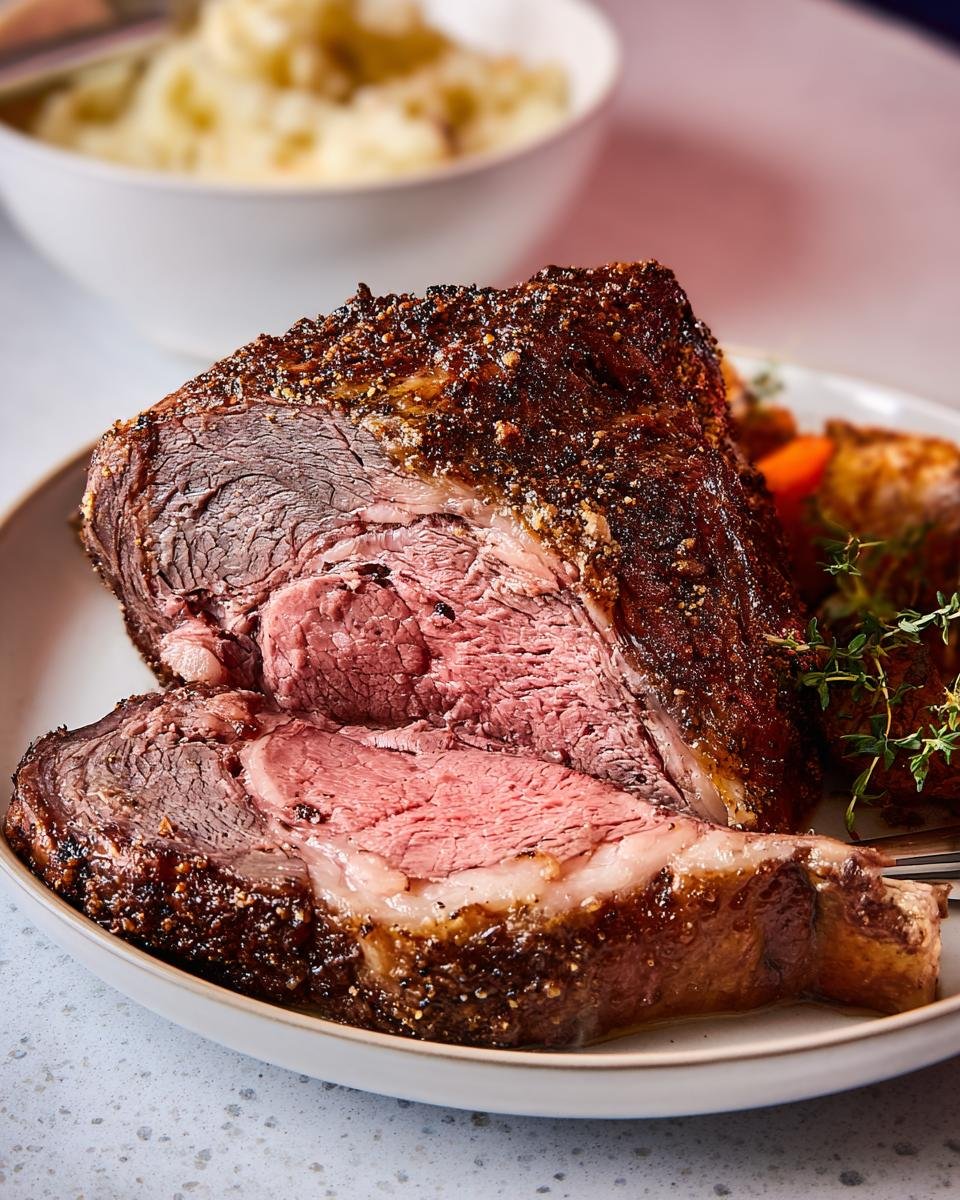
Wow, you did it! You pulled off a stunning, perfect roast. Now, you can’t just put that magnificent centerpiece on the table with a bag of chips, can you? We need sides that stand up to that richness but don’t require you to spend 10 hours cooking them!
Since this is a celebration meal, skip the usual weeknight fare. Think creamy, savory, and slightly sweet to cut through the richness of the beef. You definitely want something decadent, like a baked casserole. If you want something incredibly satisfying, try this rich Cauliflower Gratin—it’s pure comfort food and feels just as fancy as any restaurant side dish.
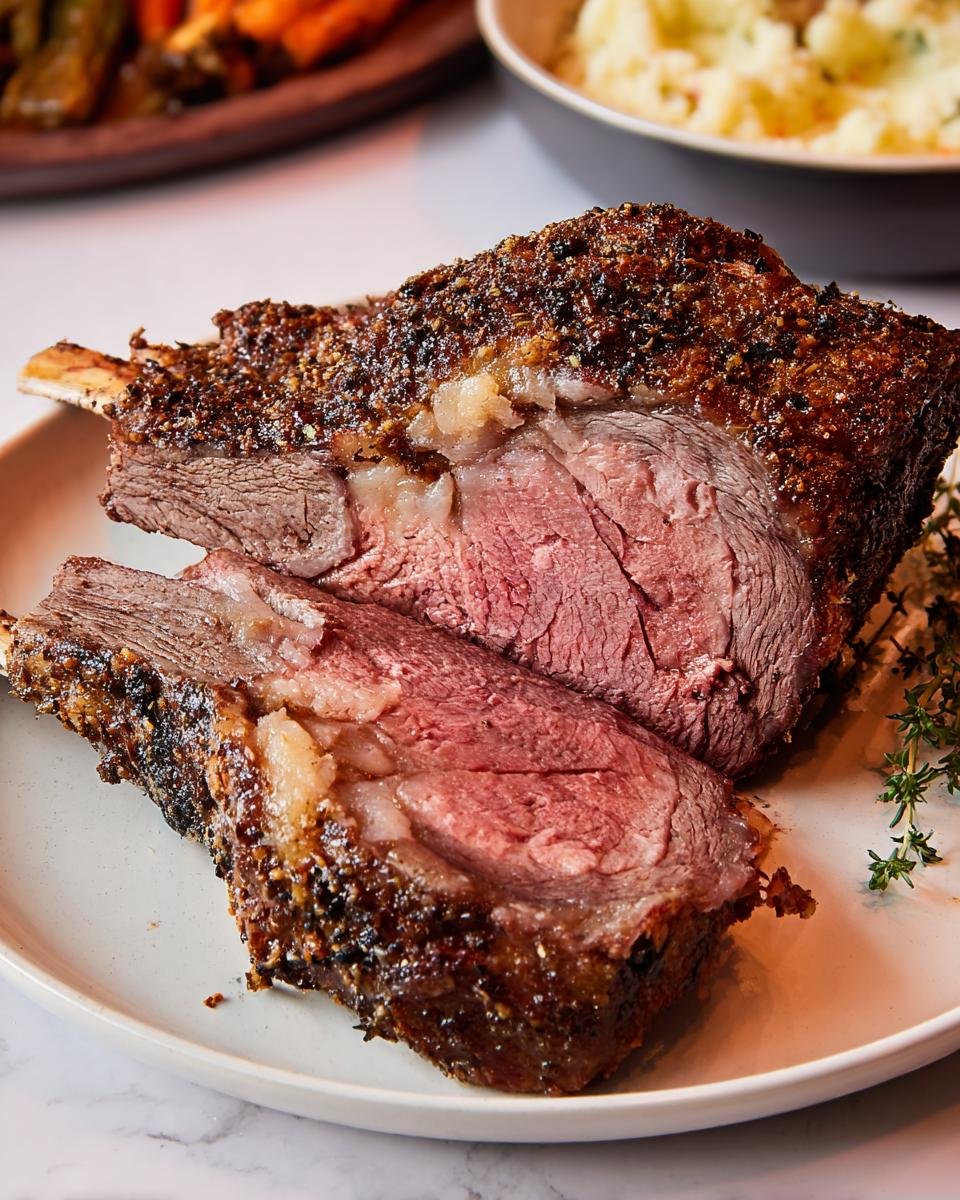
And we need a vegetable, of course! Something just slightly bright and sweet is perfect to balance all that savory beef fat. I adore roasting some carrots with maple syrup right alongside the roast pan drippings. My recipe for Maple Glazed Carrots is perfect because they get tender and sweet without taking up extra oven space!
Speaking of balance, forget little bowls of lettuce; this calls for a proper setup. Think about adding a fantastic spread to your table. Maybe you start the evening with some sophisticated Grazing Boards before the main event, or perhaps you need a really luxurious Party Dip available when people first arrive. It’s all about creating a memorable spread for your celebration, whether you are hosting for New Year’s Eve or just a fun weekend blowout!
Making Ahead and Storing Your Leftover Restaurant-Quality Prime Rib at Home
One of the most fabulous things about serving a massive roast like this is that you get to enjoy the leftovers for days! Plus, getting ahead of the game before the big party starts is a lifesaver. If you’re hosting, you need make-ahead party recipes, and prepping the prime rib early is the biggest win!
For the make-ahead prep, the best thing you can do is the rub application. Forget just doing it the morning of—I actually like to apply that beautiful herb and salt mixture the night before. Cover the roast loosely and just let it sit in the fridge. This dry-brining process really pulls flavor deep into the meat, which is a definite chef move. Just remember to pull it out about two hours before you want to start cooking so it can temper!
Now, let’s talk leftovers because nobody wants dry, sad leftover roast beef sandwiches, right? The key to keeping that texture amazing is how you store it and reheat it later. First off, you must slice the leftovers thinly against the grain. If you leave it in one big chunk, the edges dry out before the middle warms up. Store the slices tightly wrapped in heavy-duty foil, and then place that foil packet into an airtight container.
When it comes time to reheat, resist turning on the microwave unless you absolutely have to! The microwave is the enemy of juicy meat. Instead, place a small amount of beef broth or even just water in the bottom of a baking dish. Lay the sliced prime rib on a rack over the liquid—or just nestle the slices right into the broth, making sure the liquid doesn’t touch the meat itself. Cover that dish tightly with foil and warm it gently in a 300°F oven until heated through. This gentle steam bath keeps every slice unbelievably tender, letting you enjoy that amazing flavor all over again!
Frequently Asked Questions About Restaurant-Style Prime Rib
I know you’ve put so much work into getting this amazing roast ready, and I want to make sure every question you have about cooking or serving it is answered. It’s the centerpiece, after all, and we want it to be perfect for your whole crew, whether you’re hosting a big holiday bash or just whipping up some easy party food!
What is the best internal temperature for rare prime rib?
This is where that trusty meat thermometer really earns its keep! Remember, the temperature will climb a few more degrees while the roast rests, so you need to anticipate that carryover cooking. For rare, you want to pull your roast out of the oven when the thermometer hits 120°F. It should rest up to 125°F. For medium-rare, which I usually aim for, pull it at 125°F so it settles right around 130°F to 135°F. If you like it closer to medium, aim for 135°F coming out of the heat. Anything over 140°F and you start losing that beautiful pink juicy color we worked so hard for!
Can I skip bringing the roast to room temperature?
Oh, please don’t skip this! If you put a fridge-cold roast straight into a hot oven, you are guaranteeing a grey band of overcooked meat around the edges because the outside will try to cook way faster than the center. By bringing it to room temperature for about two hours beforehand, you are ensuring the heat penetrates evenly. It’s the single best way to guarantee that edge-to-edge pink perfection that the steakhouses are famous for. It’s a waiting game, but the evenness of your final slice makes it totally worthwhile!
What if I don’t have time to let the rub sit overnight?
If you’re short on time, don’t panic! You can absolutely skip the overnight dry brine. Just make sure you pat the roast down aggressively dry before applying the herb and salt mixture right before it goes into the oven. While the overnight rest is fantastic for deepening the flavor and drying the surface for a better crust, fresh application still yields an amazing result, especially since we are doing that high-heat blast at the beginning. You’ll still get incredible flavor from the fresh rosemary and thyme melting into that fat cap!
Share Your Success with Restaurant-Quality Prime Rib at Home
Seriously, seeing your results makes all this recipe testing worthwhile! I hope this guide has taken the scary guesswork out of roasting a huge piece of beef for you. I absolutely live for hearing when someone felt like a professional chef in their own kitchen.
If you tried this method for getting that perfect crust and rosy middle, please, please let me know how it went! Drop a rating right here on the recipe card, or better yet, snap a picture of that glorious slice and tag me on social media. I can’t wait to see your masterpiece of Restaurant-Quality Prime Rib at Home!
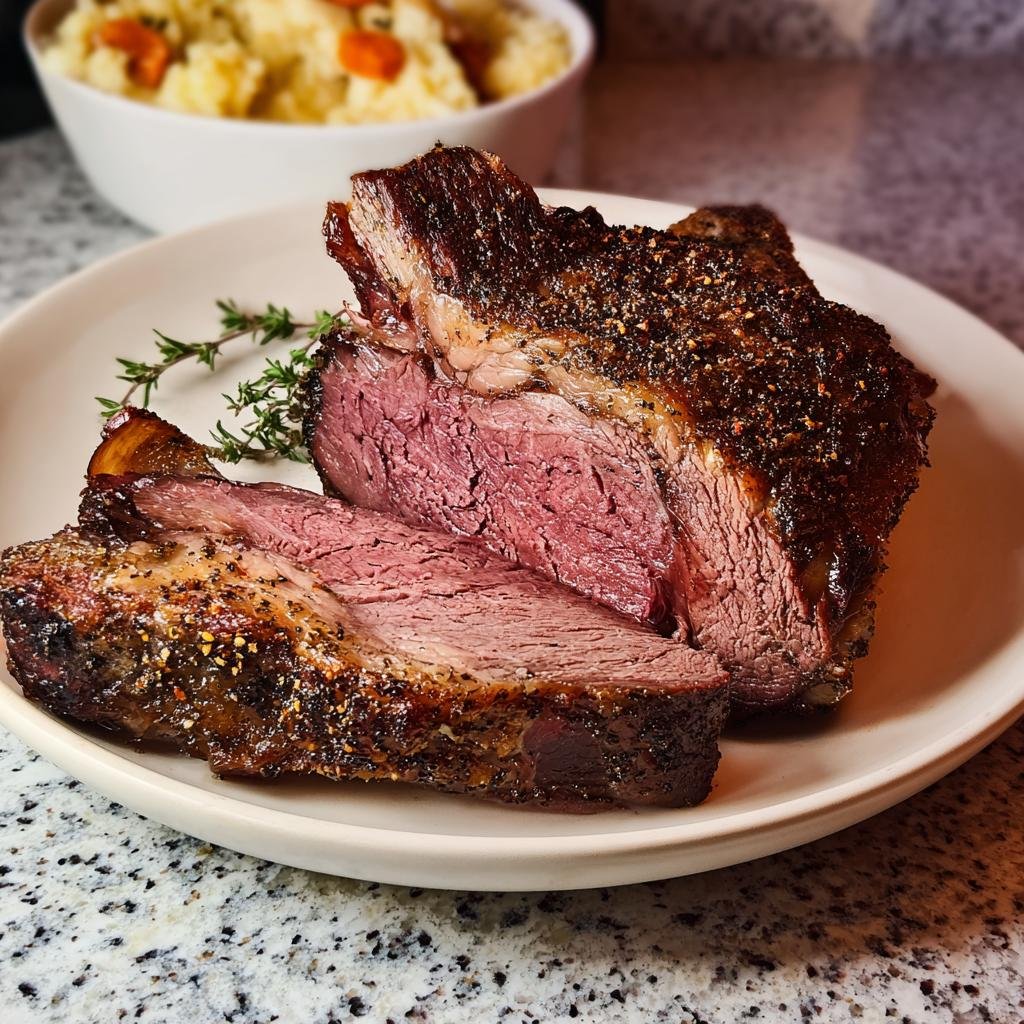
Restaurant-Quality Prime Rib at Home
Ingredients
Equipment
Method
- Bring the meat to room temperature approximately two hours before you plan to cook it. This step is important.