
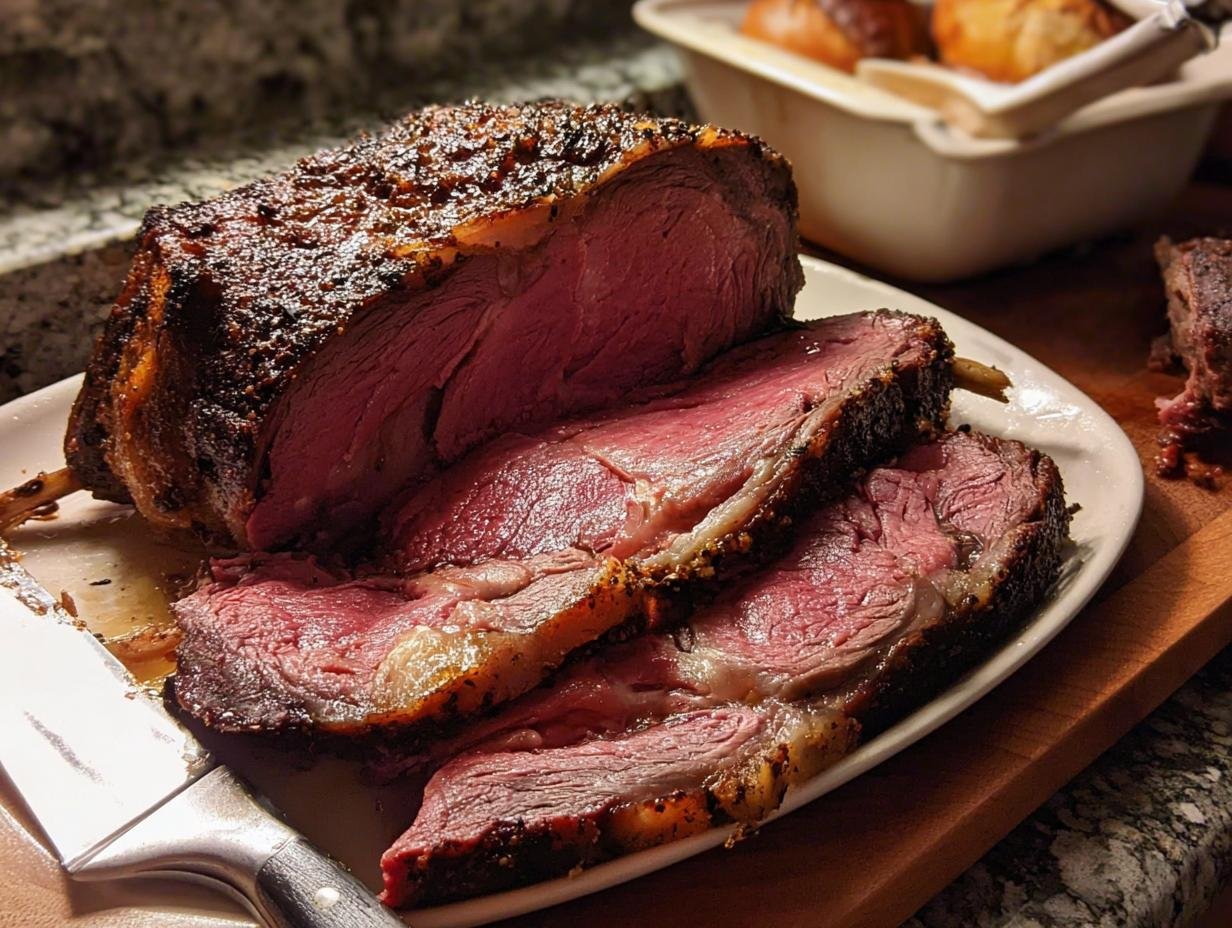
I know cooking a giant roast sounds like something you leave to the fancy steakhouse down the street, but trust me, you can absolutely nail restaurant-quality prime rib right here in your own kitchen. Forget the stress—this method is foolproof! It’s designed to give you that beautifully savory, crunchy crust outside while keeping the inside unbelievably tender and juicy. I still remember the first time we tested this recipe in the test kitchen; the aroma filled the whole house before it even came out of the oven! When we finally sliced into it, everyone just gathered around like it was Christmas morning. That sealed it for me; this dish just brings people together. That’s exactly **Why Everyone Loves This Prime Rib**, and I can’t wait for you to see how simple my favorite technique is. If you’re looking for the perfect centerpiece, especially if you’re planning a big spread that might include some amazing creamed spinach, you’ve found your winner.
Why You’ll Love This Prime Rib: The Secrets to Success
I get it; prime rib feels intimidating, like something you need a culinary degree to handle. Not true! This recipe breaks down the whole event into simple, confidence-boosting steps. You get that amazing deep crust that tastes like a fancy restaurant, but we save you from overcooking the inside. That balance is what makes **Why Everyone Loves This Prime Rib**—it’s all payoff, very little stress.
- Zero guesswork using the meat thermometer.
- An incredible crust develops naturally from the seasoning rub.
- It’s mostly hands-off cooking once it hits the oven!
Check out my journey in the test kitchen; I learned firsthand that consistency is key here.
Achieving the Perfect Temperature Gradient
People often cook big roasts at one temperature, which guarantees a wide band of gray, overcooked meat around the edges. We skip that mess! We give the roast a huge blast of heat—500 degrees—right at the start. That quick, hot sear locks in flavor and browns the herbs beautifully. Then, we instantly turn the oven off and let carry-over cooking take over for the next two hours in that residual heat. It’s brilliant; you end up with edge-to-edge medium-rare perfection.
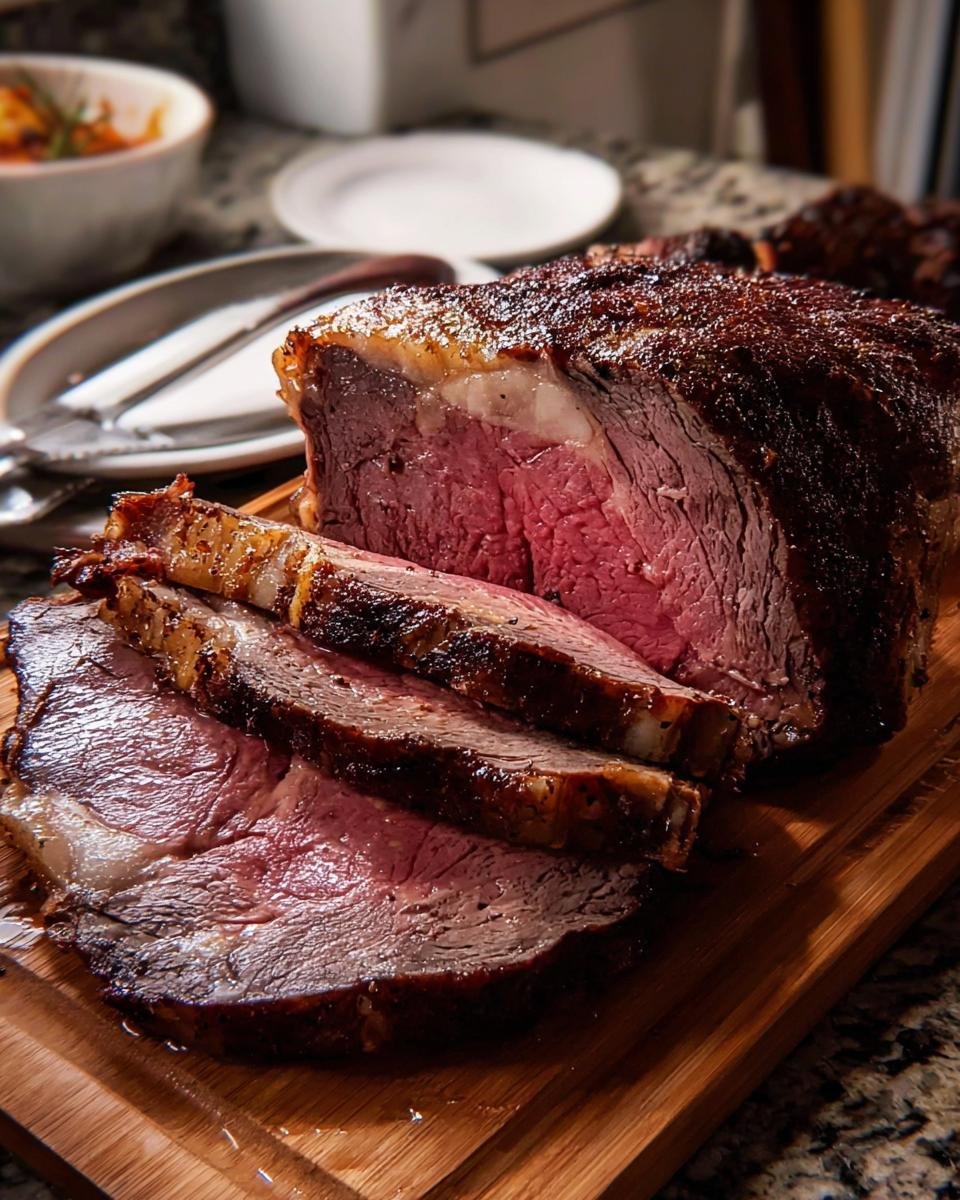
Essential Equipment for Why Everyone Loves This Prime Rib
You don’t need a whole arsenal of tools to make this incredible roast happen, but you do need the *right* tools. If you get these three things ready, the cooking process goes super smoothly! Honestly, having a good piece of equipment is half the battle when you’re aiming for that perfect texture that makes **Why Everyone Loves This Prime Rib** worthy.
First up, grab your heavy-duty roasting pan. You need something sturdy because this roast is heavy, and the pan has to handle that initial high heat without warping. Second, and this is non-negotiable, you absolutely must use a reliable meat thermometer. Don’t even think about guessing! We need high accuracy here.
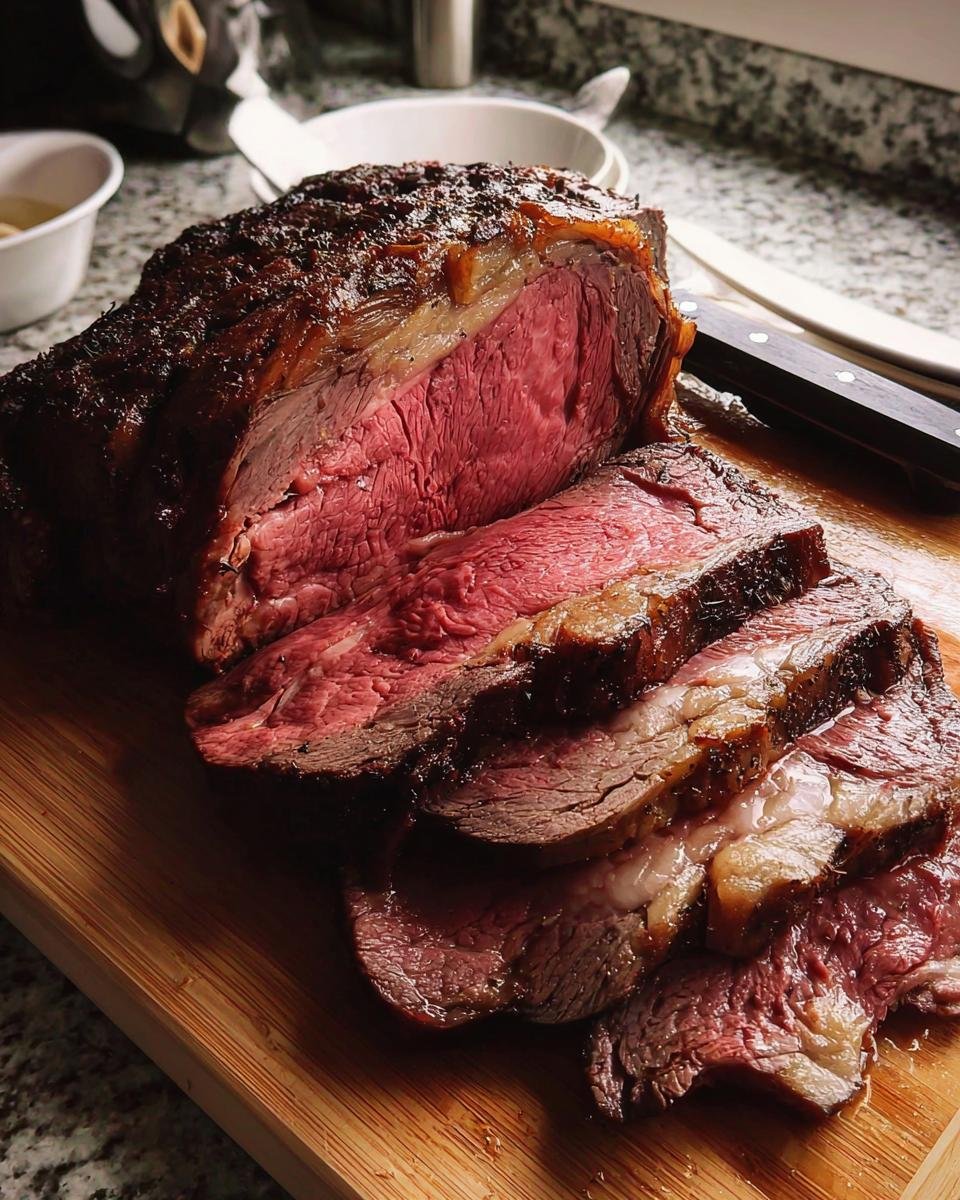
Finally, for cleanup, which is always the worst part, make sure you have some heavy-duty aluminum foil ready. You’ll use it later for resting, which keeps all those precious juices locked in the meat. That’s it—pan, thermometer, and foil!
Ingredients for Why Everyone Loves This Prime Rib
Okay, let’s talk about what goes into this showstopper! I organize my ingredients just like this when I’m prepping so nothing gets forgotten in the excitement. Using high-quality beef makes a difference, obviously, but the rub is where we pack in that deep, savory flavor that truly explains **Why Everyone Loves This Prime Rib** so much. When you pull this together, it just smells like a holiday!
For the Prime Rib Roast
You’ll need one generous 2-to-6 bone Prime Rib Roast. Make sure it’s boned and tied; this helps keep it really tight! We’re using 3 tablespoons of olive oil to help our rub stick, and don’t be shy—grab 3 cloves of garlic and slice them up. If you’re a big garlic fan like me, you can totally bump that up to four slices!
For the Savory Rub
This is the magic dust! For the best aroma and taste, please make sure your dried herbs are fresh. You’ll mix 1 tablespoon each of dried thyme and dried rosemary. Then, add 1 tablespoon of black pepper, 1 tablespoon of onion powder, and 1 tablespoon of garlic powder. The backbone of the seasoning is 2 tablespoons of good, coarse kosher salt. Mix all this together until it’s perfectly uniform.
Optional Serving Accompaniments
Once the roast is resting and smelling amazing, you might want something creamy or savory to dip into. We always serve ours with a side of Horseradish Sauce I whip up, or you can prepare a simple Prime Rib Au Jus or a rich Prime Rib Gravy using the drippings. If you’re looking for something incredible to serve alongside, I highly recommend making those herb pull-apart rolls while the roast settles!
Step-by-Step Instructions for Why Everyone Loves This Prime Rib
Alright, let’s get down to the crucial part—the actual cooking! Follow these steps exactly, and you’ll see exactly **Why Everyone Loves This Prime Rib**. The timing here is the difference between a good roast and an unforgettable one. Don’t rush the tempering time; that’s your insurance policy against a cold center!
Pre-Cooking Preparation and Seasoning
First things first, you need to temper that meat. Pull the prime rib out of the fridge a full 4 hours before you plan to start cooking. This lets the meat lose that hard chill, which helps it cook evenly. Next, if your roast isn’t already tied, bone it and tie it up tight so it holds its shape. Now, use a little knife to poke about 1/2 inch deep slits all over the top—this is where the garlic goes! Wedge those sliced garlic cloves right in there. Then, coat the entire roast lightly with olive oil. Once oiled, take your savory rub mix and press it firmly all over the outside surface. Let that seasoned beauty sit on the counter while the oven gets ready.
The High-Heat Sear Technique
Once your oven is cranked up to 500 degrees F, put the roast bone-side down into your roasting pan and slide it onto the second rack from the bottom. Make sure that meat thermometer is inserted right into the very center of the thickest part—we need that reading! Now, for the sear: calculate 5 minutes per pound of meat. If you have a 9-pound roast, that’s 45 minutes at 500 degrees. This scorching heat is what chars the herbs and salt, creating that amazing, beefy crust. Don’t worry about the edges; the next step fixes everything.
Low-Temperature Finish and Resting
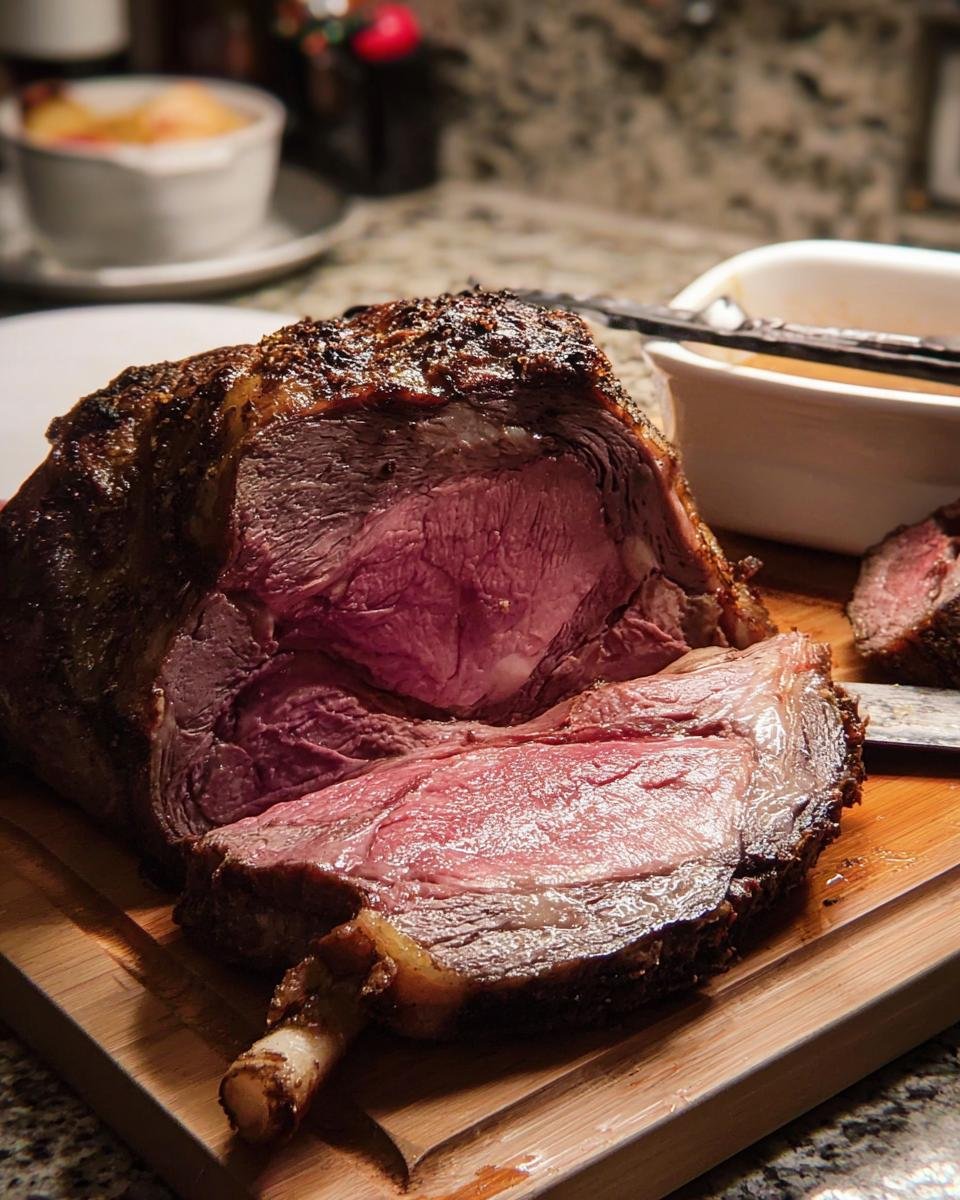
When your calculated searing time is up, the moment of truth arrives! Turn the oven OFF completely, but *do not open the door*. That residual heat is going to gently cook the roast through. Keep the door shut for about 2 hours. We are aiming for 135°F internal temperature for a perfect medium-rare. Once the thermometer hits that mark, pull it out. Even though the oven did most of the work, you still need to let it rest for 10 minutes. Tent it loosely with foil. This resting time redistributes the juices, making sure every slice is moist. You can certainly toss some freshly baked garlic knots on the side to soak up any drippings!
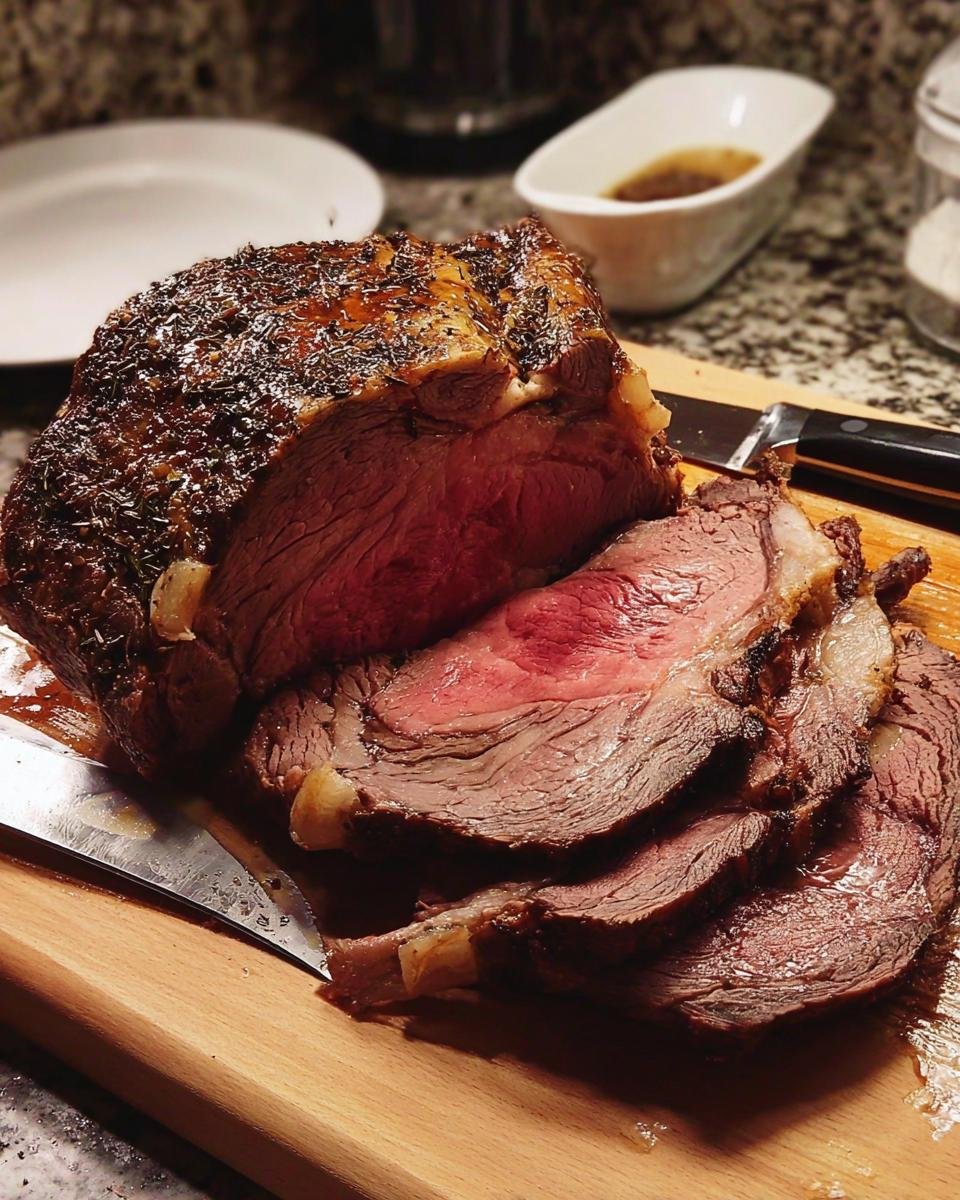
Tips for Perfecting Your Prime Rib Roast
Even though this recipe feels super straightforward, a few insider tips can take your roast from great to legendary. The quality of the meat really matters here, so try to get a well-marbled roast if you can. Look for a roast that has good white flecks of fat running through the muscle—that fat is pure flavor!
The absolute most important thing to remember during the low-temp phase is to leave the oven alone! Seriously, don’t peek. Opening the door releases all that beautifully controlled heat, and you’ll add precious minutes onto the total cook time, which messes up our even temperature gradient. You just trust the thermometer and the 2-hour passive cook time. If you want juicy results like my favorite way to cook a whole roast chicken, patience is everything!
Also, don’t skip that initial 4-hour rest on the counter. Letting the meat come up to room temperature ensures that the high-heat sear works exactly as intended without fighting a cold block of ice in the center.
Serving Why Everyone Loves This Prime Rib with Party Favorites
Once the beautiful slices of prime rib are ready, you feel that amazing accomplishment, right? But now the party really starts! Since this roast is such a substantial centerpiece, it needs amazing friends on the side. Serving this up means taking care of the whole meal, not just the meat. This is the moment to bring out all those other show-stopping holiday hits.
This amazing roast is the star, but think about what else you want on the table when people are gathering for big nights, like New Year’s Eve. You can’t just serve one thing! We love having some lighter veggie sides to cut through the richness, like a creamy gratin. It’s the perfect counterpoint!
Pairing with Crowd-Pleaser Snacks
When people arrive early, they need things to graze on. This roast takes hours to rest, so make sure you have some easy appetizers ready to keep everyone happy. Think of it this way: your main course is amazing, so your supporting cast needs to be just as easy and impressive. Set up a big beautiful cornbread station next to some simple Grazing Boards and some easy Bacon-Wrapped Bites. People will fill up on those treats while you handle the carving like a pro! It’s all about creating a full, delicious experience.
Make-Ahead and Storage for Why Everyone Loves This Prime Rib
Feeding a crowd means planning ahead, and thankfully, this roast lets you do some worrying another day! This recipe scores high marks because it’s one of our favorite Make-Ahead Party Recipes. You can absolutely season the roast the night before, cover it tightly, and keep it resting in the fridge. Just pull it out 4 hours before you want to cook so it can temper!
What about leftovers? Oh, you’ll have them, because this is a big hunk of beef! Slice the extra pieces thinly against the grain. Store them in an airtight container—I like putting just a tiny splash of leftover au jus with the meat. This keeps it from drying out in the fridge. When you reheat, don’t use the microwave!
To warm leftovers gently, lay the slices in a baking dish, add a tablespoon or two of broth or au jus to the bottom, cover tightly with foil, and heat it at a super low temp, maybe 275°F, until just warmed through. This method keeps the meat from stiffening up. You’ll see why **Why Everyone Loves This Prime Rib**—it’s just as good the next day!
Common Questions About Why Everyone Loves This Prime Rib
I always get so many questions when people are about to embark on making this roast for the first time. It totally makes sense; it’s a big investment of time and money, and nobody wants to mess up a centerpiece meal! Let’s clear up a few things so you can serve up **Why Everyone Loves This Prime Rib** feeling totally confident.
Can I use a smaller roast or a boneless cut?
You absolutely can! If you’re making something smaller, like for a smaller crew, you can use a boneless cut, but you need to adjust the timing slightly. Since the bone insulates some heat, boneless roasts cook a bit faster. I’d suggest dropping that initial high-heat timing down to about 4 minutes per pound instead of 5. When you do that, you’re keeping the calculation simple so you still get that perfect sear for your crust!
What internal temperature is best for rare?
Our recipe aims for 135°F for medium-rare, which gives you that gorgeous pink center that’s melt-in-your-mouth tender. If you are looking for truly rare, you should pull the roast when your thermometer reads 125°F. Remember, that roast will carry over-cook about 5 degrees while it rests, so pull it slightly under your target temperature. That’s the secret trick for getting it just right every time!
If you’re looking for even more ways to simplify your cooking game, check out some of my other quick and easy recipe ideas!
Nutritional Estimate Disclaimer
Now, I know some of you are tracking macros or counting calories, and I totally respect that! However, I really have to toss out a quick disclaimer here about the numbers. Because we are dealing with huge cuts of meat, and everyone’s choice of steak thickness, fat trim, and serving size is different, I haven’t calculated precise nutritional data for this prime rib recipe.
The actual values change wildly based on how much of that delicious, savory crust you eat versus the very lean center cut, not to mention what you serve alongside it—are you pairing it with my creamy cauliflower gratin or just a small side of fresh greens?
My goal here is to give you a foolproof method for cooking one of the most impressive roasts out there, so you can focus on the cooking and the enjoying! If you need exact numbers, I always suggest using a reliable recipe calculator and inputting your exact cut of beef weight and the exact measurements of your rub ingredients. That’s the safest way to get accurate info!
Share Your Success with This Roast
I genuinely hope this recipe has brought some holiday joy (or just amazing beef!) to your table. Now that you’ve mastered that high-heat sear, tell me how it went! Did you hit that perfect 135°F? Drop a comment below and let me know what you served with it. Your feedback helps us all learn, so be sure to share your photos and success stories!
Prime Rib Roast
Ingredients
Equipment
Method
- Remove the prime rib from the refrigerator 4 hours before cooking.
- OPTIONAL: Minutes before cooking, bone and tie the roast.
- Cut 1/2 inch slits on the top of the roast and insert minced or sliced garlic.
- Rub the outside of the roast with high quality olive oil.
- Combine the rosemary, thyme, kosher salt, black pepper, onion powder and garlic powder and spread evenly over the roast.
- Let the roast rest while the oven pre-heats to 500 degrees F (260 degrees C).
- Transfer the roast to a roasting pan, bone side down.
- Insert the thermometer into the center of the roast and place it in the oven on the second rack from the bottom.
- Calculate your initial cooking time by allowing 5 minutes per pound of meat. For example, a 9 lb roast cooks for 45 minutes, and a 6 lb roast cooks for 30 minutes. This initial high heat provides a nice crunch on the exterior. The seasoning rub will char, which creates the deeply savory crust.
- After your calculated cooking time ends, turn the oven off but do not open the oven door.
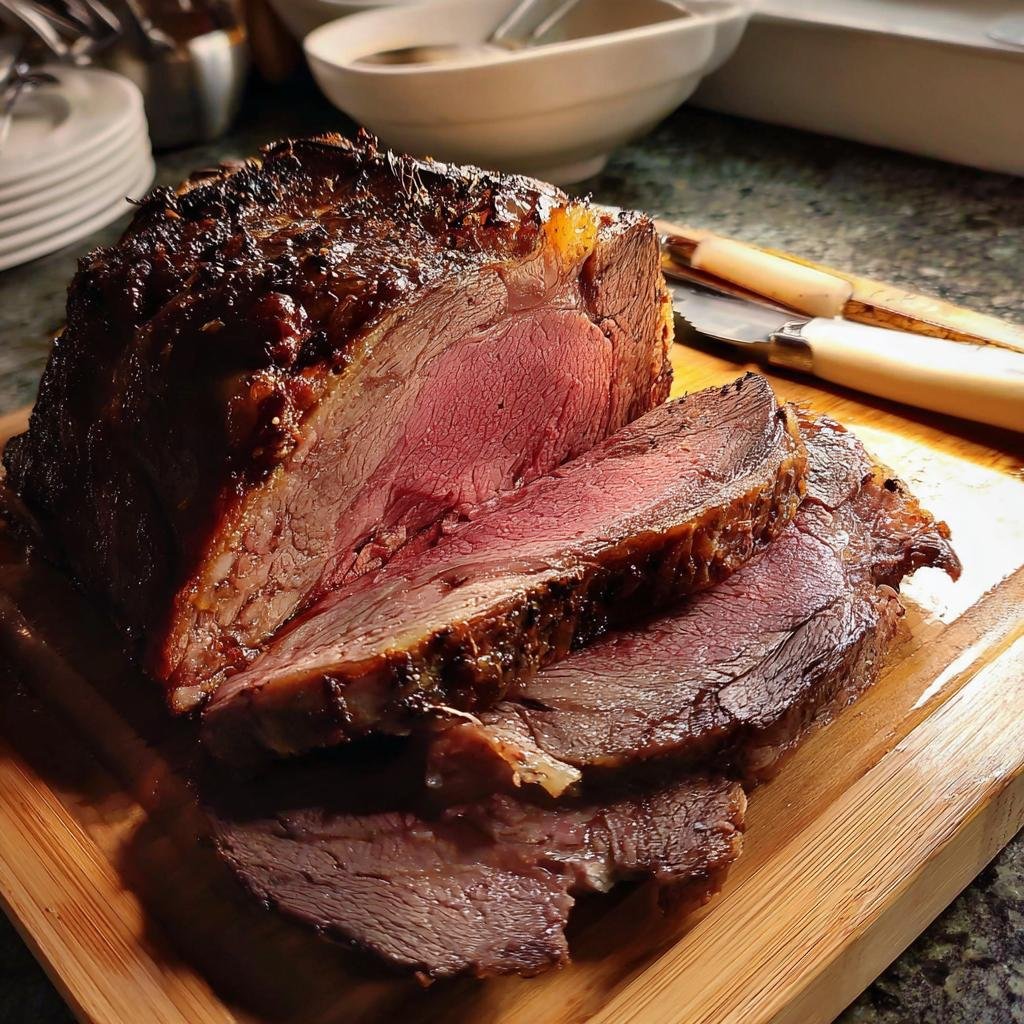
- After 2 hours, the center of your roast will reach 135 degrees F, which is medium-rare. If you prefer medium, keep it in the oven until it reaches 150 degrees F.
- Remove the roast from the oven and let it rest for 10 minutes before serving.