
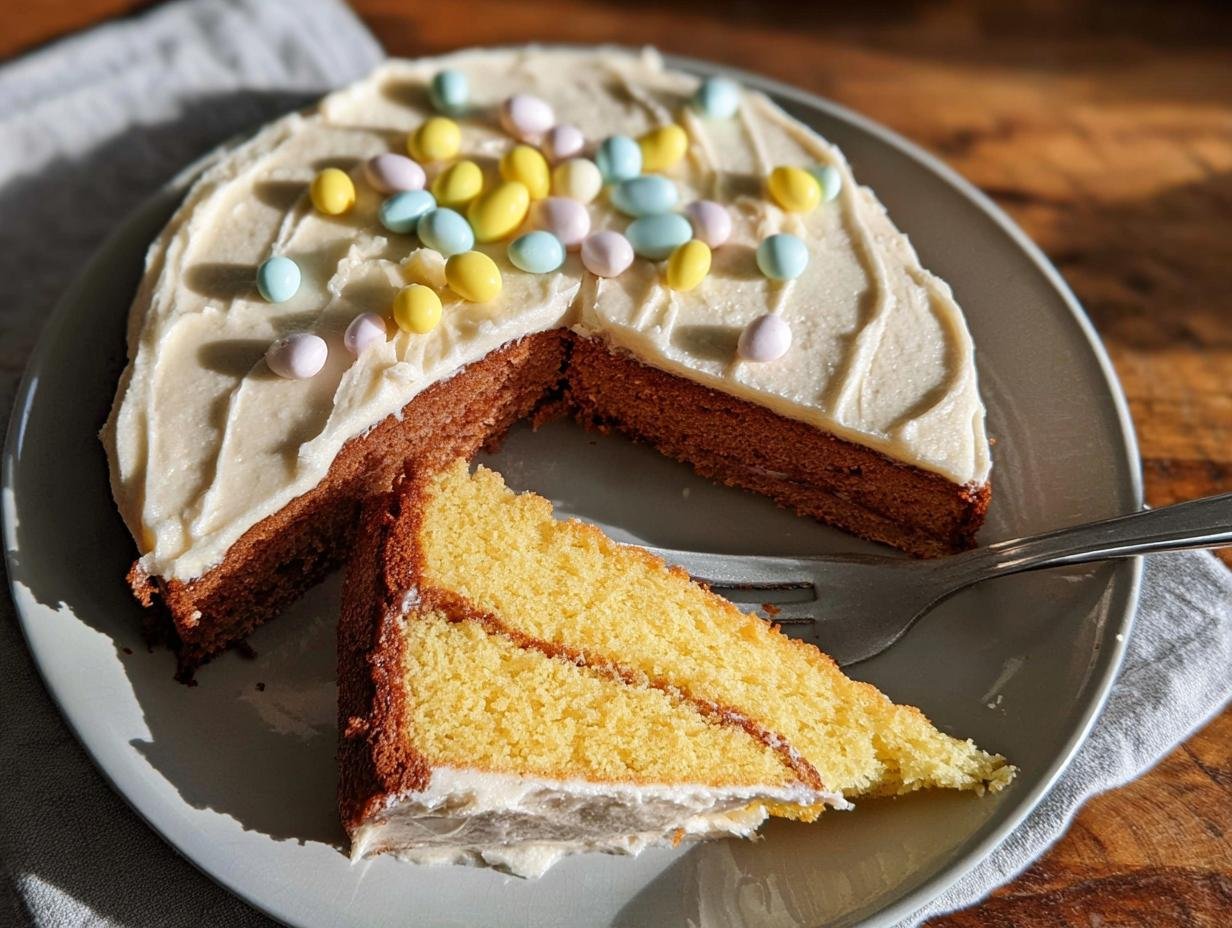
Oh man, spring is finally here, and that means time for those big family gatherings! My absolute favorite thing to bring when we celebrate Easter is this wonderfully easy cake. Seriously, if you’re looking for a foolproof easter cake recipe that lets you focus more on the egg hunt and less on fussy baking, this is it.
It’s a beautiful, straightforward sponge cake base. I love it because it tastes great plain, but it’s truly the best canvas imaginable for whatever crazy pastel frosting design you want to try out. I make this for my family every year; it’s quick, reliable, and always goes fast!
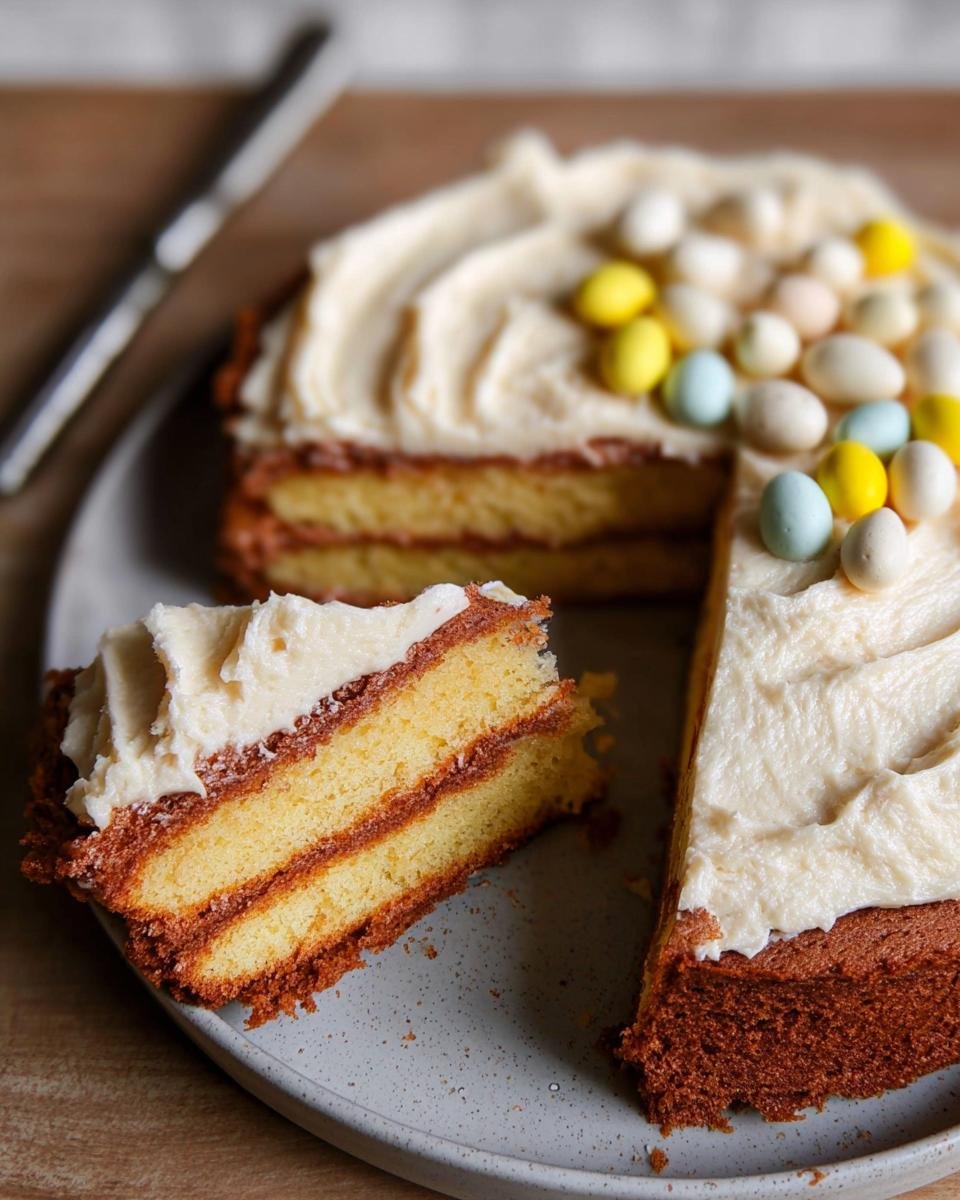
Why This is the Perfect Easter Cake Recipe for Your Celebration
I honestly think this is the best easter cake recipe out there if you aren’t looking for complicated layers that need scaffolding. It’s a classic sponge, which means it’s sturdy enough to handle heavy frosting but light enough that everyone keeps asking for a second slice.
- Quick Prep and Bake Time: Wow, talk about fast! From setting out ingredients to pulling it out of the oven, this whole thing takes just about an hour total. Total time is only 60 minutes—perfect for busy holidays!
- Versatile Base for Any Easter Decoration: This cake is your blank, fluffy slate. Whether you want simple piping or a wild bird nest design, this base holds up beautifully to whatever colors or sprinkles you throw on top.
Gathering Ingredients for Your Easter Cake Recipe
Okay, so gathering what you need is step number one, and I can’t stress enough how much the preparation matters here. For this simple easter cake recipe, everything needs to be ready to go before the mixer even plugs in. You see those notes next to the ingredients? Pay attention to those! Softened butter isn’t just a suggestion; it’s crucial for getting that light texture we talked about.
We have two main sections: making the actual sponge that feeds about 12 people, and whipping up the easy classic frosting. Trust me, having all this organized saves so much grabbing and hunting mid-mix!
Ingredients for the Simple Cake Base
This is the heart of our cake. Make sure your measuring cups are accurate here!
- 1 1/2 cups All-purpose flour (Make sure this is **Sifted**!)
- 1 1/2 tsp Baking powder
- 1/2 tsp Salt
- 1/2 cup Unsalted butter (It must be **Softened** perfectly)
- 1 cup Granulated sugar
- 2 large Eggs
- 1 tsp Vanilla extract
- 1/2 cup Milk
Ingredients for the Simple Frosting
This frosting comes together super quick, but again, if that butter isn’t soft, you’ll end up with lumpy frustration! And please, sift that powdered sugar or my heart might break!
- 1/2 cup Unsalted butter (**Softened**)
- 3 cups Powdered sugar (**Sifted**)
- 1/4 cup Milk
- 1 tsp Vanilla extract
Essential Equipment for This Easter Cake Recipe
Before we even think about turning on the oven for this easter cake recipe, let’s make sure your kitchen is set up! Having the right gear makes the 60-minute window feel generous instead of rushed. You don’t need fancy gadgets, just the basics you probably already have.
Here is the short list of what you need to make this simple sponge shine:
- Two 8-inch round cake pans (This is for those perfect, even layers!)
- An electric mixer (Handheld or stand mixer—your choice, but saves your arm!)
- A couple of good mixing bowls
Step-by-Step Instructions to Master the Easter Cake Recipe
Alright, this is where the magic happens! Honestly, if you follow these steps precisely—especially the mixing order—this easter cake recipe will turn out perfectly every time. Don’t rush the creaming; that’s the secret to a soft sponge. Remember, we are serving this for a holiday, so no pressure, but let’s make it beautiful!
Preparing the Oven and Dry Mix
First things first, get that oven warmed up! We need it humming at 350 degrees F (that’s 175 Celsius for my friends with different ovens). While it’s heating, take a moment to grease and flour your two 8-inch round pans. Seriously, don’t skip this—we don’t want sad, stuck cakes!
In one of your mixing bowls, go ahead and whisk together the sifted flour, baking powder, and salt. Just whisk it until everything looks happy and combined in there. Set that aside now.
Creating the Cake Batter Structure
Grab your big bowl and the electric mixer for this part. You want to cream that softened butter and the granulated sugar together. Keep going until it looks puffy, lighter in color, and genuinely fluffy. This step builds the air we need!
Now, beat in the eggs, but do them one at a time. Make sure the first one is totally mixed in before you drop the second one in. After those eggs are happy, splash in your vanilla extract and give it one quick mix.
Baking and Cooling the Cake Layers
This is the crucial mixing technique: you add the dry ingredients and the milk by alternating. Start with part of the dry mix, then a splash of milk, then more dry, then the rest of the milk, and finish with the last of the dry stuff. Mix only until you don’t see big flour streaks. If you overmix, you get rubber!
Divide that lovely batter evenly between your two prepared pans. Pop them in the oven. They should take about 30 to 35 minutes. Test one with a wooden pick—if it comes out clean, they’re done! Let those layers chill in the pan for about 10 minutes before turning them out onto a wire rack to cool completely. Don’t even *think* about frosting warm cake!
Making and Applying the Simple Frosting
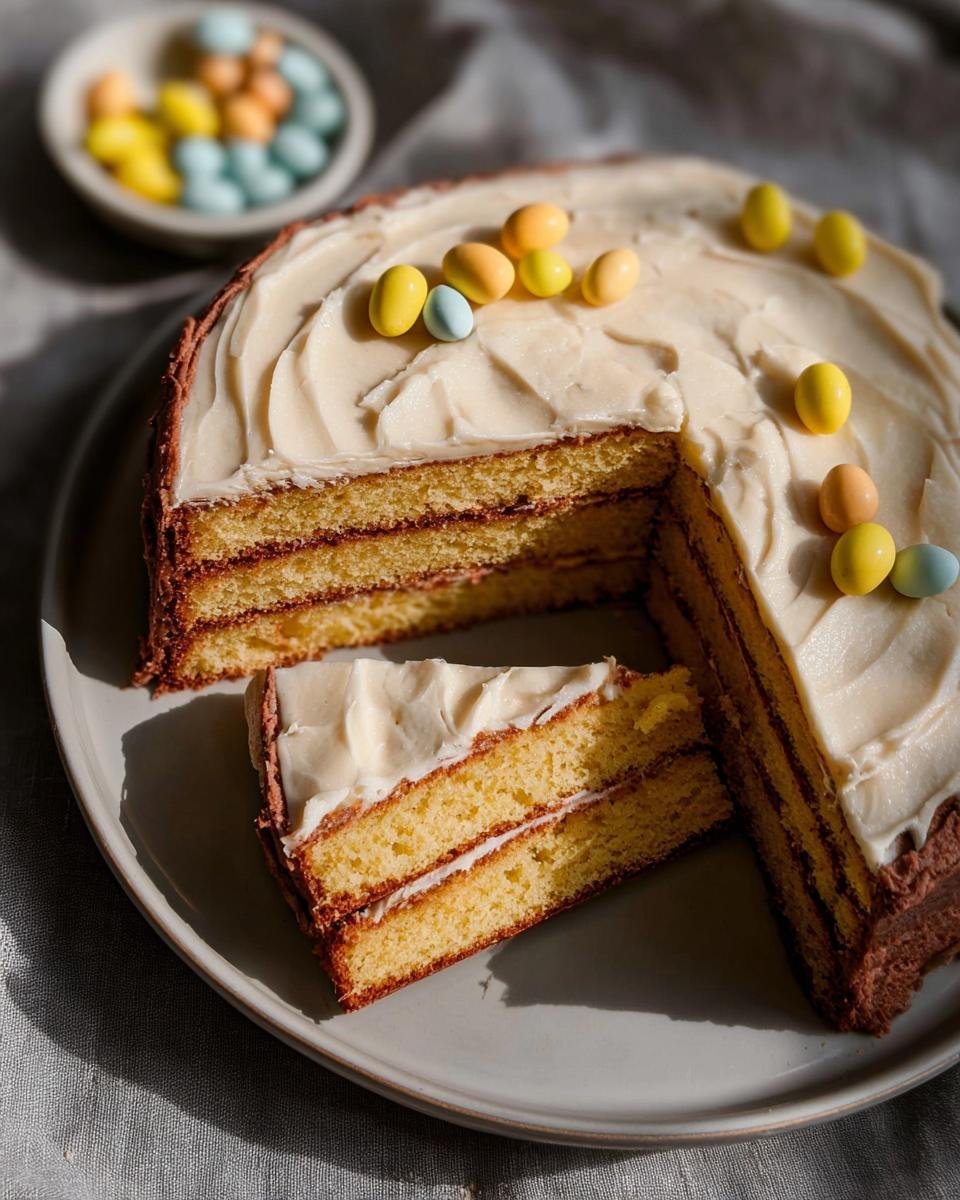
Once the layers are cooling, whip up the frosting. Beat that softened butter until it’s smooth. Now, slowly add that sifted powdered sugar while mixing. Alternate with splashes of milk and the vanilla. Keep beating until that frosting is perfectly smooth and gorgeous—it should be easily spreadable.
When those layers are stone-cold, stack them up! Apply a generous layer of frosting between the two layers and then cover the top and sides. Then, go nuts with whatever fun Easter decorations you have planned!
Expert Tips for a Perfect Easter Cake
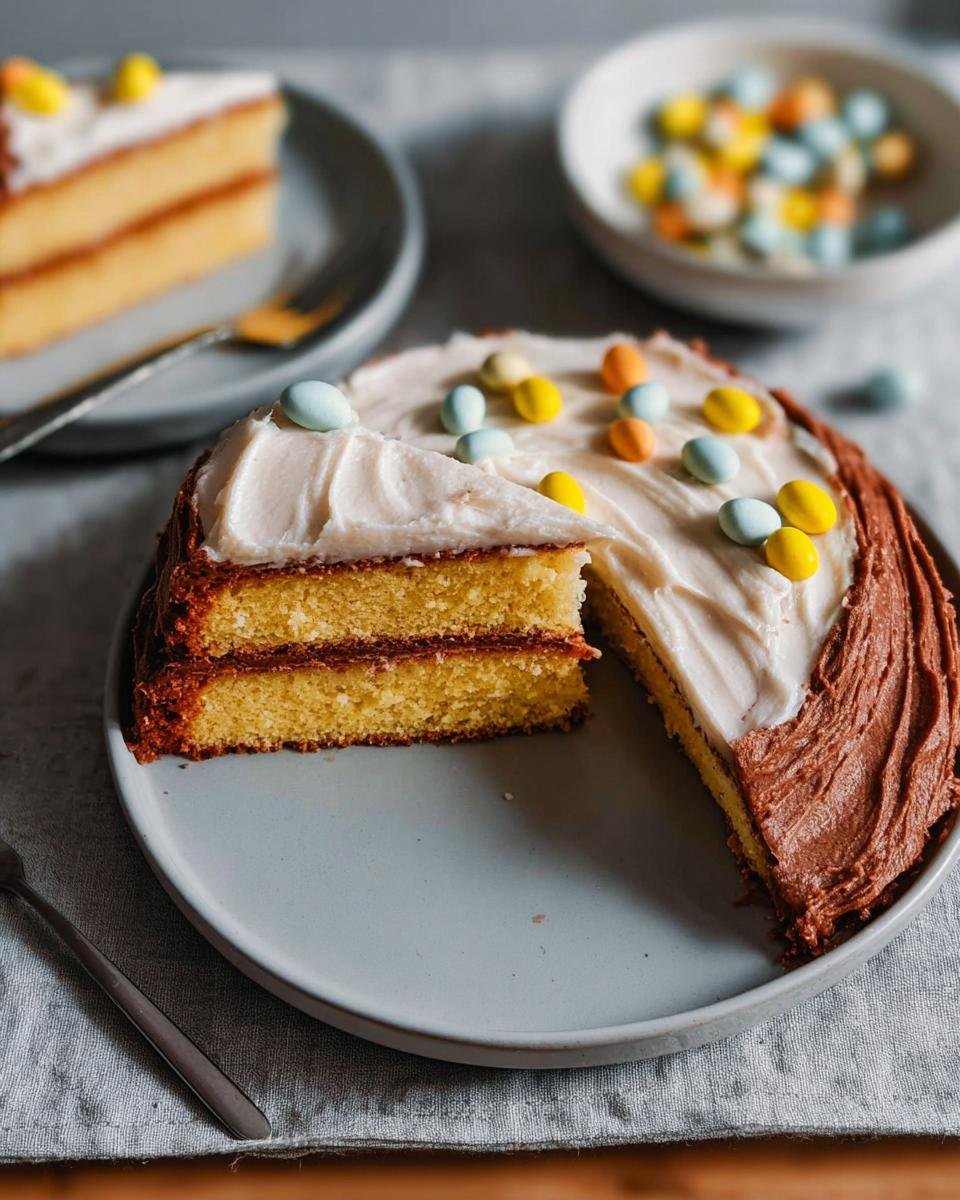
Everyone loves a simple easter cake recipe, but sometimes simple things need a little professional nudge, right? These tips are what I learned over the years to make this basic sponge cake taste like it came from a bakery. Follow these two rules, and you absolutely won’t have any trouble getting a beautiful layer cake ready for Easter Sunday!
Ingredient Temperature Matters
If you try to cream cold butter, you’re just going to end up frustrated and with lumps! The butter needs to be soft—like, if you press it, it leaves a clean dent but doesn’t feel greasy. That’s because creaming warm butter and sugar creates tiny pockets of air. The eggs need to be room temperature too so they mix in smoothly without deflating all those lovely air pockets when they hit the batter.
Avoiding Overmixing
Listen, once you start adding the flour to the wet mixture, you are developing gluten, and gluten is wonderful for bread, but terrible for a tender cake! As soon as you see those last little streaks of flour disappear when you alternate the dry and milk, stop the mixer immediately. If you keep beating it, you’ll tighten up the structure, and your lovely light layer will turn out chewy and tough. We want fluffy, not firm!
Making Ahead and Storing Your Easter Cake Recipe
The holidays are crazy, so let’s talk planning! It’s a lifesaver that this simple easter cake recipe lets you break up the work. You can totally bake those two sponge layers a day a head of time. Just let them cool completely, wrap each one tightly in plastic wrap, and they’ll hang out just fine on the counter.
If you frost the cake one day before serving, that’s perfect! Keep the finished, frosted easter cake recipe covered loosely at room temperature until about an hour before serving. Since this doesn’t have a cream cheese frosting, we don’t need to worry about refrigeration unless your house is really warm!
Creative Variations for Your Sponge Cake
While this basic sponge is fantastic as is, sometimes you want to sneak in a little extra spring flavor, right? It’s one of the best things about having a straightforward easter cake recipe—it’s so easy to personalize!
If you want a brighter note, try adding the zest of one whole lemon into the butter and sugar right when you cream them together. That bright citrus smell while baking is just heavenly! You could also swap out the vanilla extract for almond extract, or even use a combination of both. Just 1/2 teaspoon of almond extract totally transforms the flavor profile!
Frequently Asked Questions About This Easter Cake
It’s so common to have questions when you’re trying a new vanilla-forward easter cake recipe, especially when you’re planning it for a big holiday meal! I’ve gathered the ones I hear most often when people try to make this simple sponge for their tables. Don’t worry about the serving size—this recipe easily feeds 12 happy people!
Can I use buttermilk instead of milk in this easter cake recipe?
Oh yes, you absolutely can! The recipe notes mention this trick. If you swap out the regular milk for buttermilk, you’re going to get an even lighter, slightly tangier crumb. It reacts wonderfully with the baking powder, making the cake feel airy. Just make sure your butter and eggs are room temperature if you use buttermilk, so nothing curdles when you mix!
How should I store the frosted cake?
Since this recipe uses a simple butter and powdered sugar frosting, it’s pretty resilient. If you are serving it the same day you frost it, leaving it covered loosely on the counter is totally great. If you need to store it for a day or two before your big Easter brunch, pop it under a cake dome or cover it loosely with plastic wrap and keep it on the counter. Don’t stick it in the fridge unless your kitchen is scorching hot, because the butter in the frosting can get really hard!
What is the best way to decorate this simple cake for Easter?
This cake is just waiting for some spring cheer! The easiest thing is to just divide your homemade frosting into two bowls. Color one batch a pale yellow and the other a soft pink or robin’s egg blue. Frost the cake with those pastel colors alternating, or swirl them together! Then, top it off with some white sprinkles or maybe even some cute little edible sugar flowers. It looks amazing without taking hours!
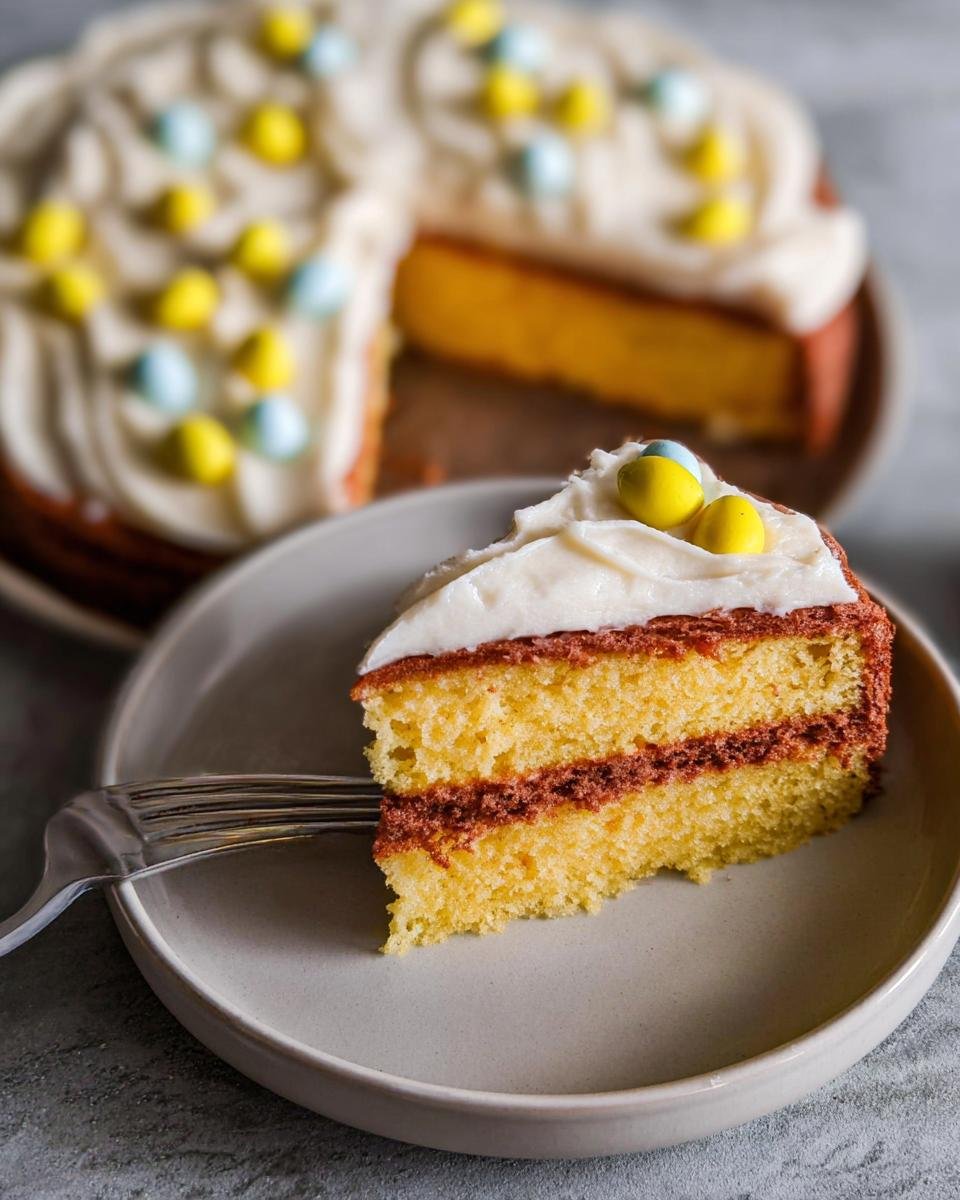
Estimated Nutritional Snapshot
Now, I know when we’re making a gorgeous easter cake recipe like this for a celebration, counting every little thing isn’t usually the main focus. But since people always ask, I pulled together the approximate nutrition breakdown for one generous slice. Remember, this is just an estimate; how much frosting you slap on there will definitely change the final numbers!
This is based on 1/12th of the total cake and frosting, so consider this your best guess for planning purposes. It shows you what you’re working with in terms of fuel for all that egg hunting!
- Calories: Around 450 per slice
- Fat: Roughly 19 grams
- Carbohydrates: This one is higher in carbs, about 65 grams
- Protein: A modest 5 grams
It’s a holiday treat, so we expect the carbs to be up there because of the sugar and flour, but knowing the numbers means you can enjoy that slice of simple sponge cake guilt-free!
Share Your Simple Easter Cake Creations
I truly hope this simple easter cake recipe becomes a staple at your table just like it is at mine! Now that you’ve got this beautiful, fluffy sponge ready to go, I really, really want to see what you do with it.
Did you nail that perfect pale yellow frosting? Did you manage a more ambitious Easter scene with little marshmallow chicks? Don’t be shy! Head down to the comments section below and let me know how it went.
Give this recipe a rating if you loved how easy and reliable it was—it helps other bakers trust this sponge cake too! And if you post pictures on social media, please tag me! I get such a kick out of seeing how everyone puts their own spin on this classic holiday bake. Happy baking, and enjoy your beautiful Easter celebration!
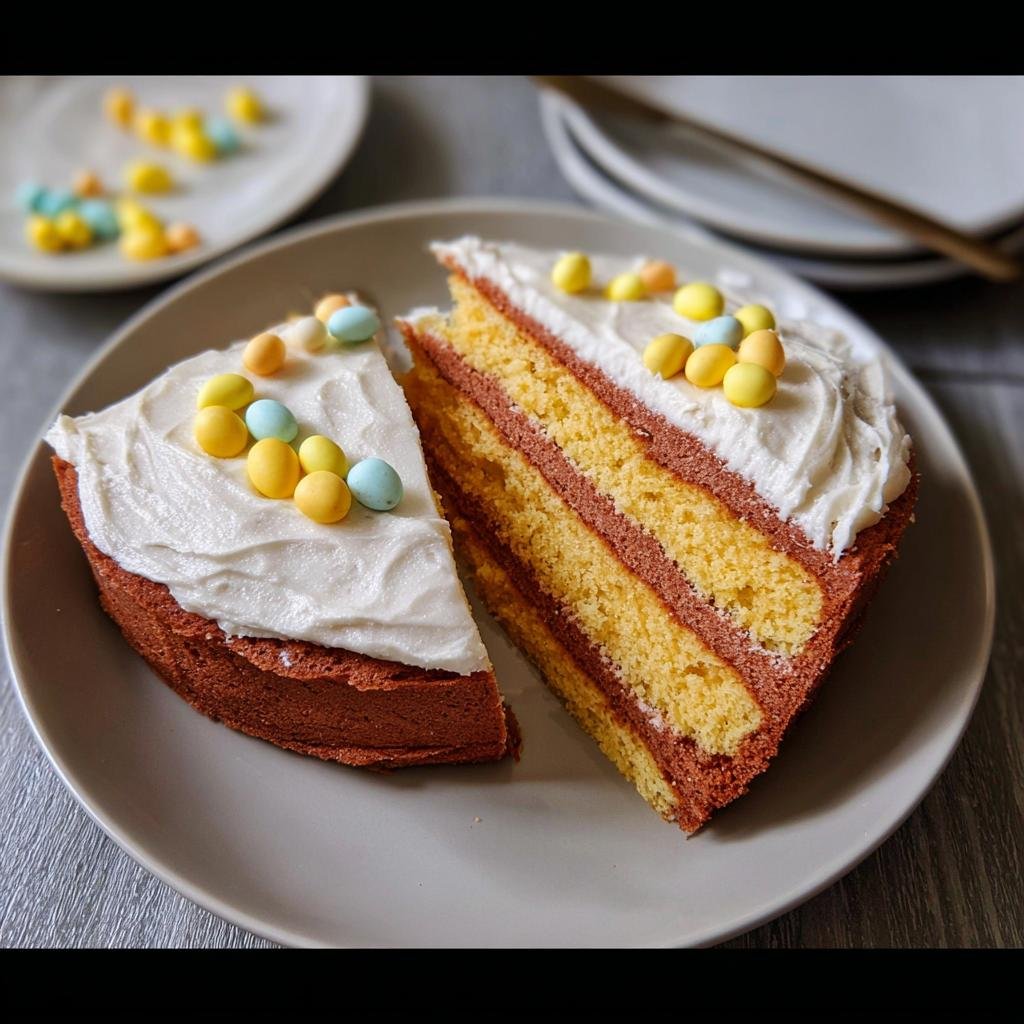
Simple Easter Cake
Ingredients
Equipment
Method
- Preheat your oven to 350 degrees F (175 degrees C). Grease and flour two 8-inch round cake pans.
- In a small bowl, whisk together the flour, baking powder, and salt. Set this aside.
- In a large bowl, use an electric mixer to cream the softened butter and sugar together until the mixture is light and fluffy.
- Beat in the eggs one at a time, mixing well after each addition. Stir in the vanilla extract.
- Gradually add the dry ingredients to the wet ingredients, alternating with the milk. Begin and end with the dry ingredients. Mix until just combined; do not overmix.
- Divide the batter evenly between the prepared cake pans. Bake for 30 to 35 minutes, or until a wooden pick inserted into the center comes out clean.
- Let the cakes cool in the pans for 10 minutes before inverting them onto a wire rack to cool completely.
- To make the frosting, beat the softened butter until smooth. Gradually add the powdered sugar, alternating with the milk and vanilla extract. Beat until the frosting is smooth and spreadable.
- Once the cakes are completely cool, frost and stack them. Decorate as you like for Easter.