
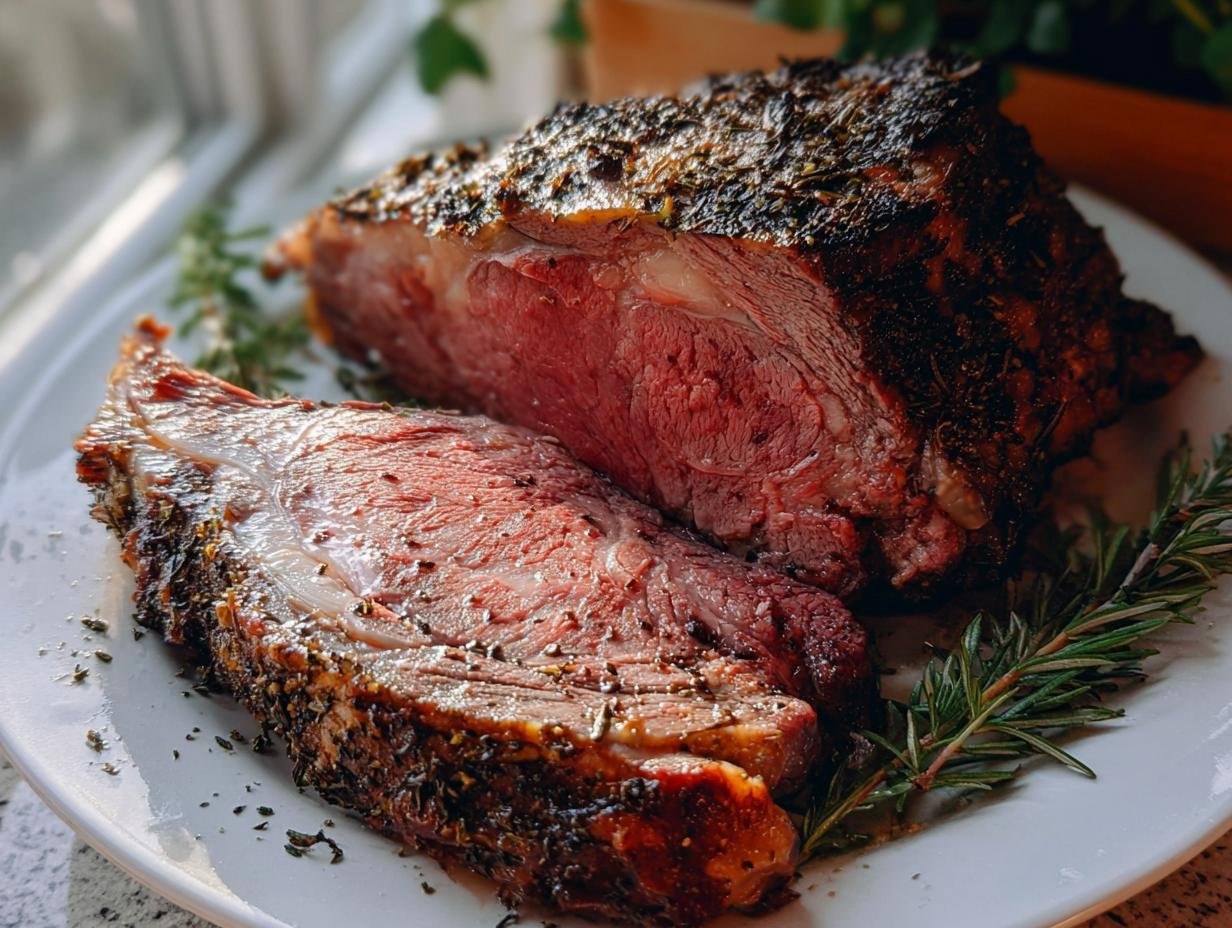
You know those evenings where you desperately want an impressive, restaurant-quality dinner but your energy levels are sitting somewhere near zero? I promise you, enjoying something truly luxurious doesn’t have to mean spending all day locked in the kitchen. That’s why I’m so excited to share my absolute favorite shortcut: the Easy Prime Rib for Busy Nights recipe. When I first moved into my tiny apartment, I desperately wanted to celebrate, but cooking felt impossible. Surprisingly, this simplified prime rib method using a simple herb and salt rub was my first big ‘busy night victory.’ It turns out, tender, flavorful roast beef is totally accessible, even on the tightest schedule!
Why This Easy Prime Rib for Busy Nights Works
When time is short, we usually skip the roasts, right? Not anymore! This method is all about maximizing that incredible prime rib flavor without the fuss. It’s shockingly simple, which is exactly what we busy folks need in our weeknights. Plus, the majority of the work is actually hands-off aging time in the fridge.
- This recipe lets you get that stunning, high-end steakhouse experience at home with almost no stress.
- The active prep takes barely 15 minutes, leaving you time to throw together a fast side dish.
- You get huge flavor payoff from incredibly basic ingredients—we aren’t hiding anything here!
If you’re looking for other ways to speed up your dinner game, check out some of my favorite quick lunch ideas that are just as efficient!
Quick Prep Time for Your Easy Prime Rib for Busy Nights
Seriously, this is the best part for anyone working a full day. The active time you spend touching this roast is just about 15 minutes total. We mix the rub, smear it on, and tuck it in the fridge for 8 hours minimum—that overnight marinating time does all the heavy lifting for you!
This means that when it’s time to cook, you just pull it out, let it sit on the counter for a couple of hours, and toss it in the oven. That hands-off waiting is magic for busy professionals who need dinner to be mostly hands-off!
Simple Flavor Profile: Maximum Impact
Don’t let the simplicity fool you; this rub is powerful! We aren’t messing around with complicated, messy binders or anything weird. It’s just coarse salt, pepper, fresh herbs, and garlic. The high amount of salt does most of the work, drawing moisture in beautifully while the fat renders. It creates its own amazing crust and au jus.
Trust me when I say you do not need to spend time making a fancy paste or sauce when you have quality beef and these basic seasonings. The flavor speaks for itself!
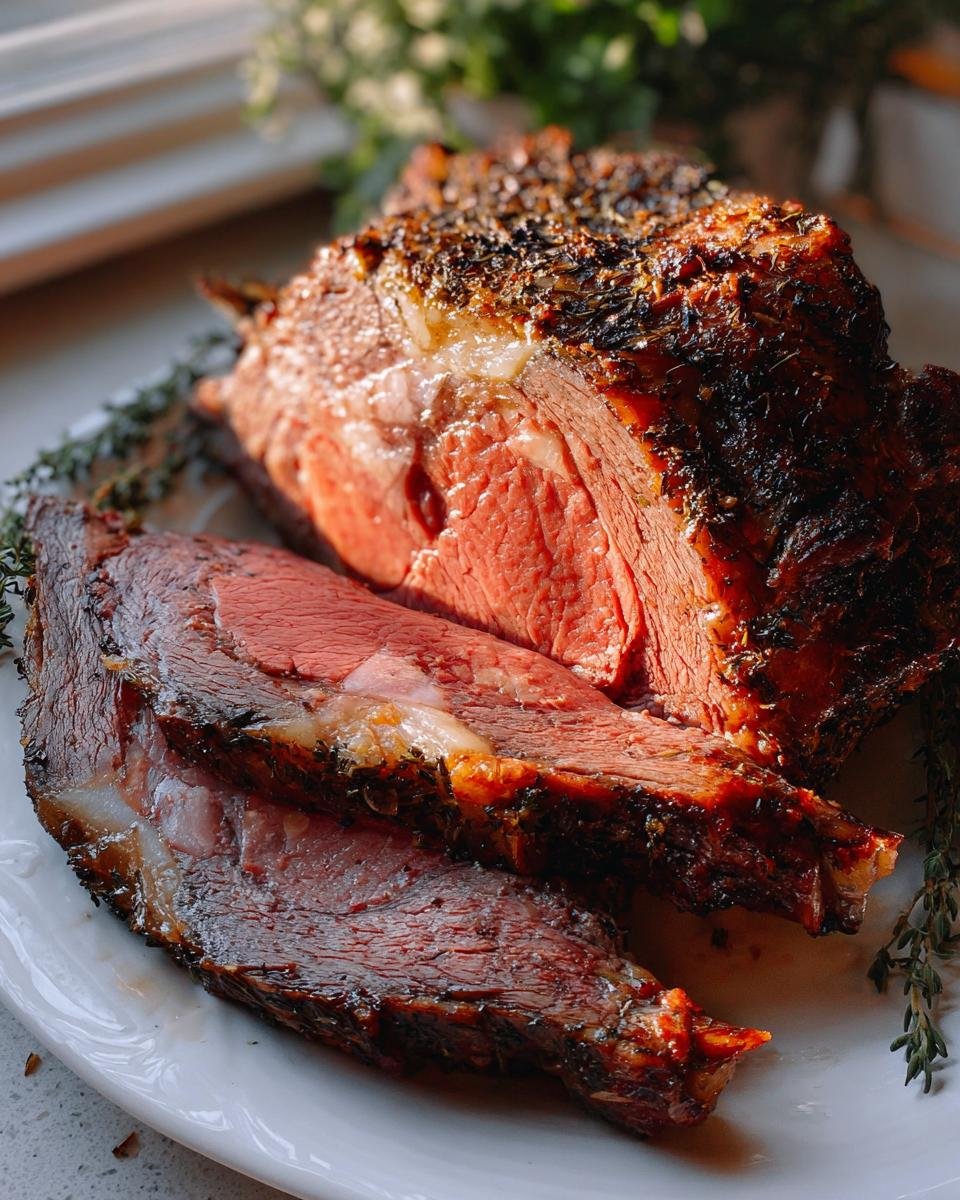
Gathering Ingredients for Easy Prime Rib for Busy Nights
Since this recipe is just a few core components, quality matters a ton here. There’s nowhere for mediocre ingredients to hide! The best thing about this ingredient list is that nearly everything is measured *per pound* of roast you are using. This makes calculating exactly what you need for your specific crowd super easy, whether you have a tiny roast or a huge one.
Because the rub is so simple, using fresh herbs is a must—don’t grab the dried stuff for this! If you’re already stocking up on dried herbs, you might want to grab the ingredients for some fantastic herb rolls to serve alongside.
Roast Preparation Components
First up, let’s talk about the beef itself. You absolutely need a bone-in prime rib roast for the best results here. We want that bone insulation helping protect the meat while it cooks! Keep in mind that we plan for about one pound of raw roast weight per guest. Don’t forget the secret weapon supporting the roast—you need about 1/3 of a medium onion per pound of meat, diced or thickly sliced, to sit right under the roast in the pan.
- One bone-in prime rib roast (Note: If your roast is 6 lbs or less, you’ll need to adjust the cooking time later on, so make a mental note!)
The Essential Herb Rub for Your Easy Prime Rib for Busy Nights
This is where all the flavor comes from, and since these measurements are based per pound, you just multiply for your total roast size!
- Coarse salt (Kosher or sea salt): 1 teaspoon per pound
- Freshly ground black pepper: 1/2 teaspoon per pound
- Minced garlic: 1 teaspoon per pound
- Fresh rosemary: 1 teaspoon per pound
- Fresh thyme: 1 teaspoon per pound
- Olive oil: 1/2 teaspoon per pound
Equipment Needed for This Easy Prime Rib for Busy Nights
You don’t need a giant specialized arsenal for this roast, thankfully! We rely on a few simple tools that help us manage the heat and juices correctly. The roasting pan and the rack are crucial because they keep the meat slightly elevated, stopping it from stewing in its own juices while it cooks.
And please, please, please—don’t skip the meat thermometer. That’s our secret weapon for hitting that perfect medium-rare every single time, which is the hallmark of a great roast!
- Flat roasting rack to keep the beef lifted.
- A sturdy roasting pan to catch all those glorious drippings for the au jus.
- A reliable meat thermometer—this is how we guarantee success without guessing.
- A fine mesh strainer for making sure the final sauce is silky smooth.
Step-by-Step Instructions for Your Easy Prime Rib for Busy Nights
This is the part where we turn that marinated beauty into the star of your table! I know it looks like a lot of steps, but honestly, once the oven is hot, you’re mostly just waiting—and basting! Because we did all that work marinating overnight, the active cooking process flies by. Trust me, the payoff is worth every single minute this roast spends getting cozy in the oven. You can even check out how I make garlic butter beef while you wait for this one to finish!
Initial Prep and Overnight Marination
First things first, you need to rinse that roast off under cold water and pat it until it’s super dry with paper towels—don’t skip drying the fat cap! Set your roast up on the rack over your bed of sliced onions in the pan. Then, mix up that incredible herb rub and rub it all over every surface. Cover it tightly with plastic wrap and let it chill overnight. Seriously, this overnight bath is why the morning prep is such a breeze!
The High-Heat Sear Phase
Take the roast out two hours before you want to cook it so it gets friendly with room temperature. Crank your oven up to a screaming hot 450°F! Pop it in, possibly on a lower rack initially to avoid burning the seasoning too fast. After about 30 minutes, you need to pour just a half-cup of water into the bottom of the hot pan. This tiny bit of liquid keeps your drippings from smoking up your house! After that first half-hour, turn the roast a full 180 degrees so it browns evenly on that second side, giving it another 30 minutes.
Lower Temperature Roasting and Checking Doneness
Once it’s beautifully browned (about an hour in total), turn that oven heat way down to 350°F. Now we cook low and slow until that gorgeous internal temperature hits 125°F for medium-rare—that’s the magic zone! You must baste it every 30 minutes while it’s roasting low. If you notice the top is getting too dark or charred, just loosely tent it with foil, but leave the sides open so the crust stays crisp.
Resting and Creating the Au Jus
Once you hit that target temperature, pull that magnificent roast out and set it on your cutting board. Cover it lightly with foil and walk away for a solid 20 minutes! This resting is non-negotiable; it lets all those hard-earned juices redistribute evenly through the meat. While you wait, pour the pan juices through your fine mesh strainer into a separate container to get rid of the onions and solids. If that resulting jus tastes a little concentrated, just stir in half a cup of hot water until it reaches your preferred saltiness, warm it up, and get ready to serve!
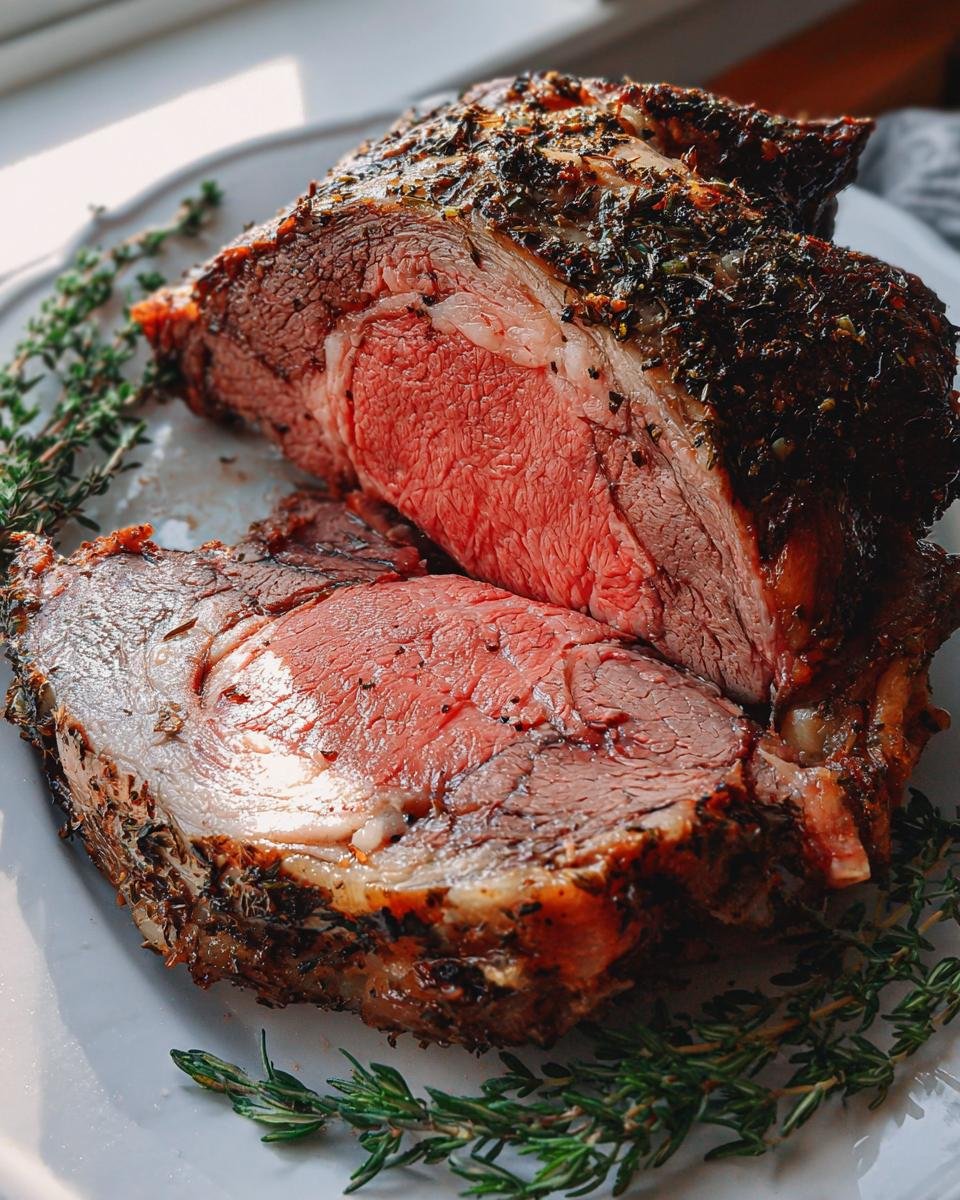
Tips for Perfect Easy Prime Rib for Busy Nights
Even though this is designed to be easy, nailing that perfect internal temperature is still key to serving an amazing roast. I’ve learned a few little tricks over the years that help guarantee success, especially when I’m dealing with a slightly smaller piece of meat or if I know my oven runs a little hot! These tips might seem small, but they make a huge difference between good and absolutely spectacular.
If you want your next roast chicken to be just as foolproof, be sure to check out my guide on how to get juicy roast chicken with pan drippings—the same rules about resting apply!
Adjusting Cook Times for Smaller Roasts
This is super important if you’re only feeding two or three people and you picked up a smaller prime rib, say six pounds or less. The original timing works best for larger roasts!
For those smaller cuts, you need to reduce that initial blast of high heat. Instead of a full 60 minutes up at 450°F, only give it 40 minutes at that hot temperature. After that, drop the heat down to 325°F. Then, switch to the standard fifteen minutes per pound rule you often see for roasts to finish it off. Always use the thermometer, though, because weights can lie!
Using Your Meat Thermometer Correctly
I preach this from the rooftops: your oven temperature settings are just suggestions! Every oven is slightly calibrated differently, and if you’re using a cheaper cut or one with a weirder shape, the middle can cook faster or slower than you expect. That’s why our meat thermometer is your best friend here.
Make sure you are inserting that probe right into the thickest part of the roast, avoiding hitting the bone, as the bone will give you a false high reading. You want to pull the roast when it’s about five degrees lower than your final target temperature because it will keep rising while it rests. If you skip this step, you skip foolproof roasting!
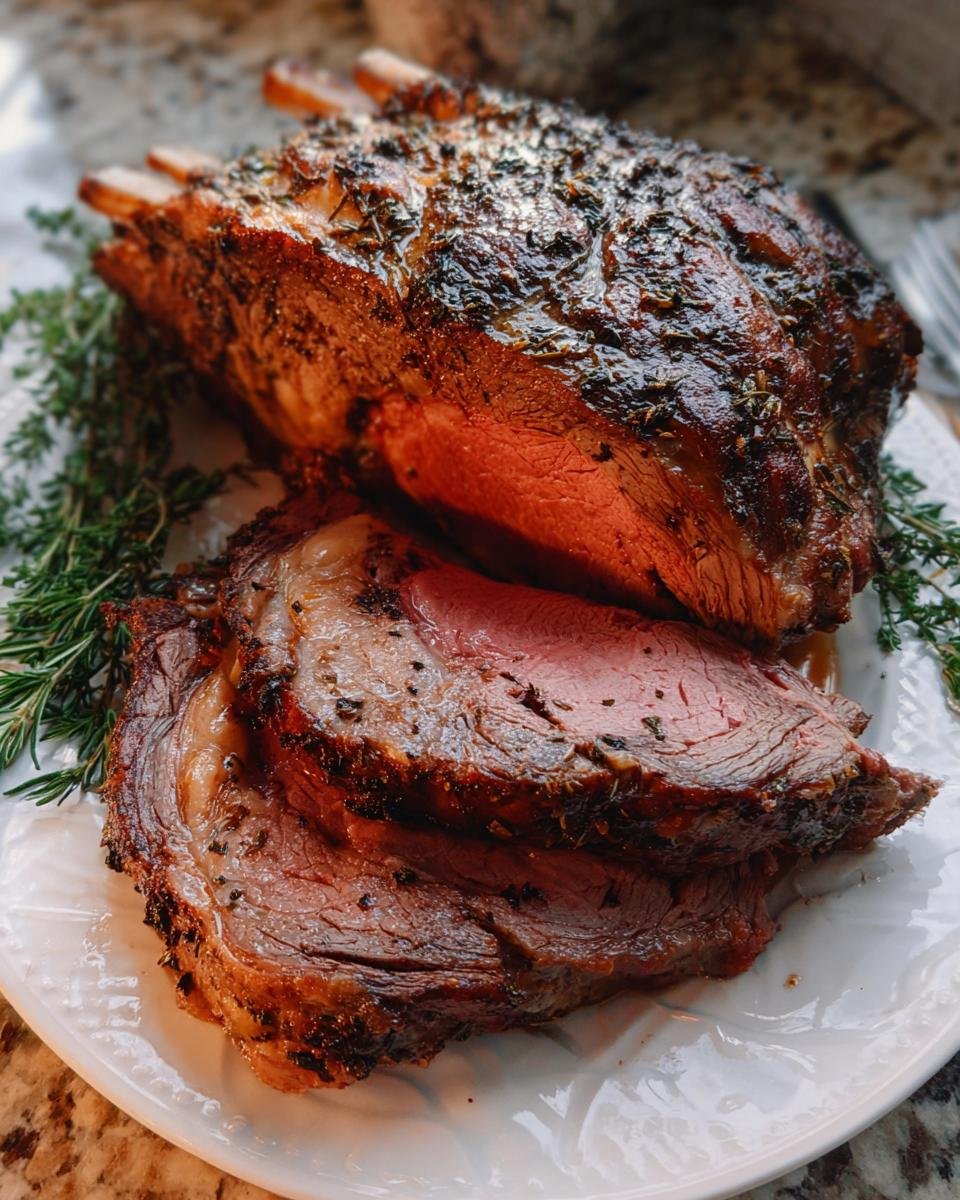
Serving Suggestions for Your Easy Prime Rib for Busy Nights
So, you’ve got this incredible, perfectly pink prime rib resting like a culinary superstar on your counter. Now what? You can’t exactly serve roast perfection with a bag of chips, right? But since this is my recipe for the Easy Prime Rib for Busy Nights, all the sides need to match that low-effort, high-reward vibe!
I always prefer sides that can either be made way ahead of time, or require almost zero attention while the roast is doing its thing. Think of your sides as the perfect background singers for your main event! If you’re thinking about easy bread accompaniments, you absolutely have to try making the cheddar chive dinner rolls; they are ridiculously easy to prep the day before.
For a classic steakhouse feel without the fuss, you need a creamy green element. My favorite choice is homemade creamed spinach recipe. While it requires a little stirring, it’s fast and feels so indulgent next to the rich beef. If you’re planning a larger holiday spread, you could definitely use this as part of your make-ahead party recipes lineup!
If you want to skip traditional starch entirely, you can roast up some quick vegetables in the oven alongside your prime rib for the last hour. Think balsamic glazed asparagus or maybe some easy roasted root vegetables. It keeps the whole meal contained in one appliance, which is the ultimate win for a busy weeknight!
Storage and Reheating Instructions
First off, is there anything better than leftover prime rib? I don’t think so! It means you basically get a second, no-effort gourmet meal the next night. But the key here is storing it right so that next-day slice is still beautiful and not dried out. This roast is so rich that it actually stores and reheats better than, say, a lean pork loin!
When storing, you need to make sure you keep that moisture locked in. Cut any leftover meat off the bone and slice the roast thinly against the grain. Put the slices into an airtight container—not just tin foil! Airtight containers are your best friend for preventing that fridge air from sucking all the flavor and moisture out.
You should be good in the fridge for about three to four days max. Don’t try to push it past that; prime rib deserves respect! If you want to try roasting vegetables later in the week, check out my guide on oven-roasted vegetables; they are great alongside steak leftovers.
How to Reheat Without Drying It Out
The biggest mistake people make reheating prime rib is using a microwave or blasting it in a high oven. That just turns your beautiful roast into beef jerky! The secret is slow reheating with added steam—we want to basically re-steam the meat.
Put your thin slices into a shallow oven-safe dish. Pour just enough of your leftover au jus (or a little beef broth, if you ran out!) over the meat to cover the very bottom of the dish—don’t drown it, just give it some moisture.
Cover that dish tightly with aluminum foil. Pop it into a low oven, around 275°F (135°C). Let it warm up slowly. For thin slices, this usually only takes about 10 to 15 minutes. When it’s gently heated through, that’s it! It’ll be almost as tender as when you first pulled it off the carving board!
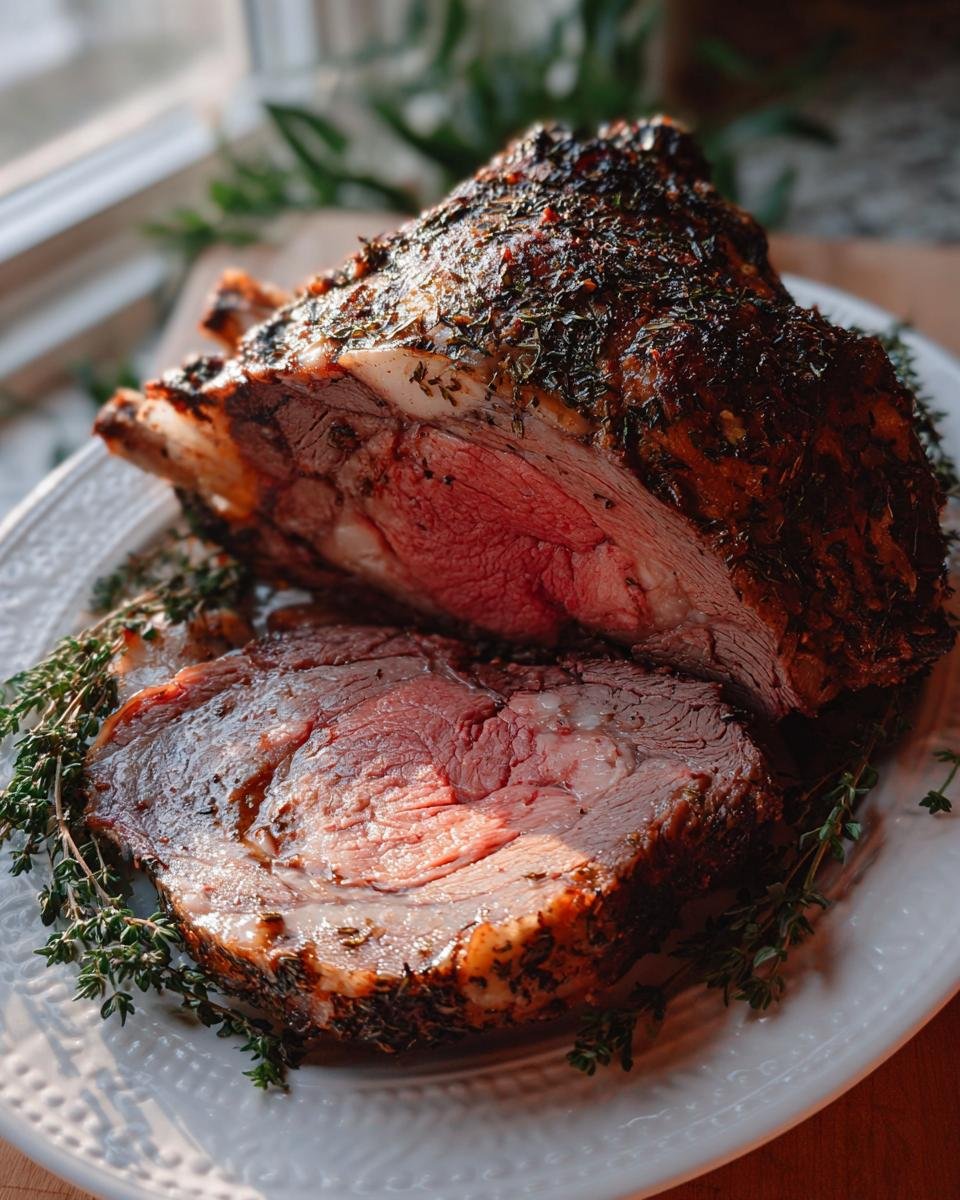
Frequently Asked Questions About Easy Prime Rib for Busy Nights
It’s totally normal to have questions when you’re tackling a big roast, especially if you’re trying to squeeze it into a tight schedule! I’ve gathered the ones I get asked the most to give you total confidence when you go to make this dish. Don’t worry if you’re new to roasts; we’ll figure out the timing together!
Can I make this Easy Prime Rib for Busy Nights ahead of time?
Yes, absolutely! This is the secret weapon for people hosting parties or just wanting a super relaxed weekend. You can mix up that brilliant herb rub and smear it all over the roast. Cover it tightly and keep it in the fridge for up to 24 hours. That 8-hour minimum is really just for maximum flavor penetration.
However, the actual cooking—that high-heat sear followed by the slow roast—must happen the day you plan to eat it. You want that beautiful crust and the immediate resting period right before serving. But for something like make-ahead party recipes, prepping the meat the day before is genius!
What temperature should I aim for if I prefer well-done?
We aim for 125°F for medium-rare on this roast because the flavor and tenderness are best there, but you absolutely cook to your preference! Remember, this is where that trusty meat thermometer becomes your best friend. You need to pull the roast out of the oven when it’s about 5 degrees *below* your final target, because it keeps cooking while it rests for those 20 minutes.
For medium folks, pull it at 130°F. If you really need it well-done, target pulling it around 145°F. At that point, the meat will be fully cooked through, and while it won’t be quite as juicy as the medium-rare version, it will still taste amazing thanks to the fat cap and the overnight marination!
What are some Crowd-Pleaser Snacks to serve while the roast rests?
That 20-minute resting time after four hours of cooking feels like forever when you’re hungry! Since this is an Easy Prime Rib for Busy Nights recipe, you don’t want to suddenly pivot into a complex appetizer session. You need something simple that utilizes the oven space before or after the roast, or something that is truly zero-prep.
My go-to **Crowd-Pleaser Snacks** for this waiting period are simple cheese and cracker boards—they require zero cooking! If you still have some ambient heat, though, quickly warmed olives or some simple bacon-wrapped bites (if you’re feeling inspired!) are fast. The goal is satisfying grazing food that keeps people happy until that glorious moment you slice the beef!
Estimated Nutritional Data for This Recipe
Okay, so let’s talk numbers for a second. Since prime rib is inherently rich, the nutritional info really depends on how much of that glorious rendered fat you eat! The data below is just an estimate calculated based on the serving size being one pound of the raw roast weight, so this doesn’t account for how much fat cooks off, nor does it include any au jus you pour over it.
You’ll notice the sodium is pretty high, which makes sense because we are aggressive with that coarse salt rub! Remember, this is just a ballpark guess to give you an idea, and your final numbers will definitely change based on the specific cut of beef you buy. It’s the nature of cooking something this beautiful and simple!
- Calories: 709
- Fat: 62g (with 26g saturated fat)
- Protein: 32g
- Carbohydrates: 7g
If you are watching sodium, you can definitely pull back on the salt in the initial rub, but make sure you compensate by letting that roast marinate even longer so the herbs and garlic have time to penetrate the meat!
Share Your Easy Prime Rib for Busy Nights Success
Now that you’ve conquered what seems like a complicated, fancy roast right in the middle of your busy week, I truly want to hear about it! This recipe is living proof, as I learned years ago in that tiny apartment kitchen, that incredible meals are achievable on a busy schedule. Don’t keep that tender, perfectly crusted prime rib all to yourself!
Please leave a rating for this recipe right down below. Tell me what you served with it—did you go for easy appetizers or stick to quick sides? Did you find that 125°F target worked perfectly for your oven, or did you need to nudge it up a bit?
If you snapped a picture of that beautiful sliced roast resting next to the au jus, totally share it on Instagram and tag me! It honestly makes my entire week seeing your kitchen victories. I’m Emily Santiago, and I love helping you prove that delicious, high-quality cooking fits into *your* schedule, not the other way around. Happy roasting!
If you want to learn more about my philosophy on fitting great food into busy lives, you can read all about my journey over on my About Me page!
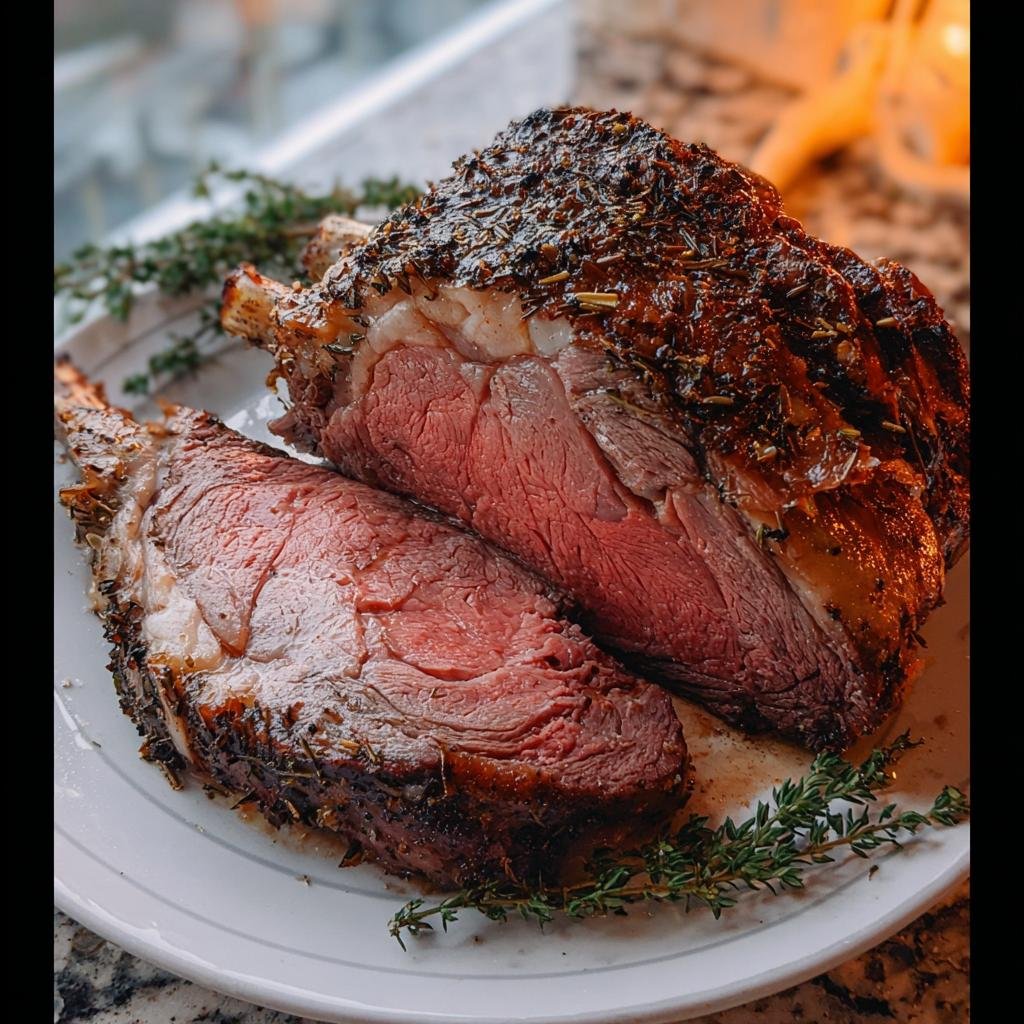
Easy Prime Rib for Busy Nights
Ingredients
Equipment
Method
- Rinse the prime rib roast with cold water and pat it dry with paper towels. Leave the fat layer on top.
- Place a flat roasting rack inside a roasting pan. Spread the onions on top of the rack, or rest the roast directly on the onions if you skip the rack.
- Mix the salt, pepper, garlic, herbs, and olive oil in a bowl. Rub this marinade mixture evenly all over the roast.
- Cover the roast with plastic wrap and marinate it in the refrigerator overnight, for at least 8 hours.
- Take the roast out of the refrigerator 2 hours before cooking. Preheat your oven to 450°F/230°C. Place the roast on a lower oven rack, possibly at the bottom of the oven for the first hour to prevent quick browning.
- After 30 minutes in the oven, add ½ cup of water to the bottom of the roasting pan to keep drippings from burning and smoking. Limit the water to prevent steaming the beef.
- Turn your roast 180 degrees and cook for another 30 minutes until it starts to brown. Position any side with more fat toward the inside of the oven for even browning.
- Once the roast is browned on the outside (about 1 hour total), lower the oven heat to 350°F/175°C.
- Continue cooking for 90-120 minutes. Baste every 30 minutes. Add ½ cup of hot water at a time if the roasting pan becomes dry. For medium rare, remove the roast when the internal temperature reaches 125°F/51°C. If the top starts to char, lightly cover it with foil, leaving the sides open. Turn the roast 180 degrees again if needed for even cooking.
- Set the prime rib on a cutting board or platter and cover it lightly with aluminum foil. Let it rest for 20 minutes.
- While the roast rests, pour the pan juices through a fine mesh strainer into a fat separator. If you need more liquid, add ½ cup of water to the hot pan and stir lightly. Pour the separated juices into a small pot, warm the au jus, and serve it alongside the prime rib. You can thin the au jus with hot water if it is too salty.