
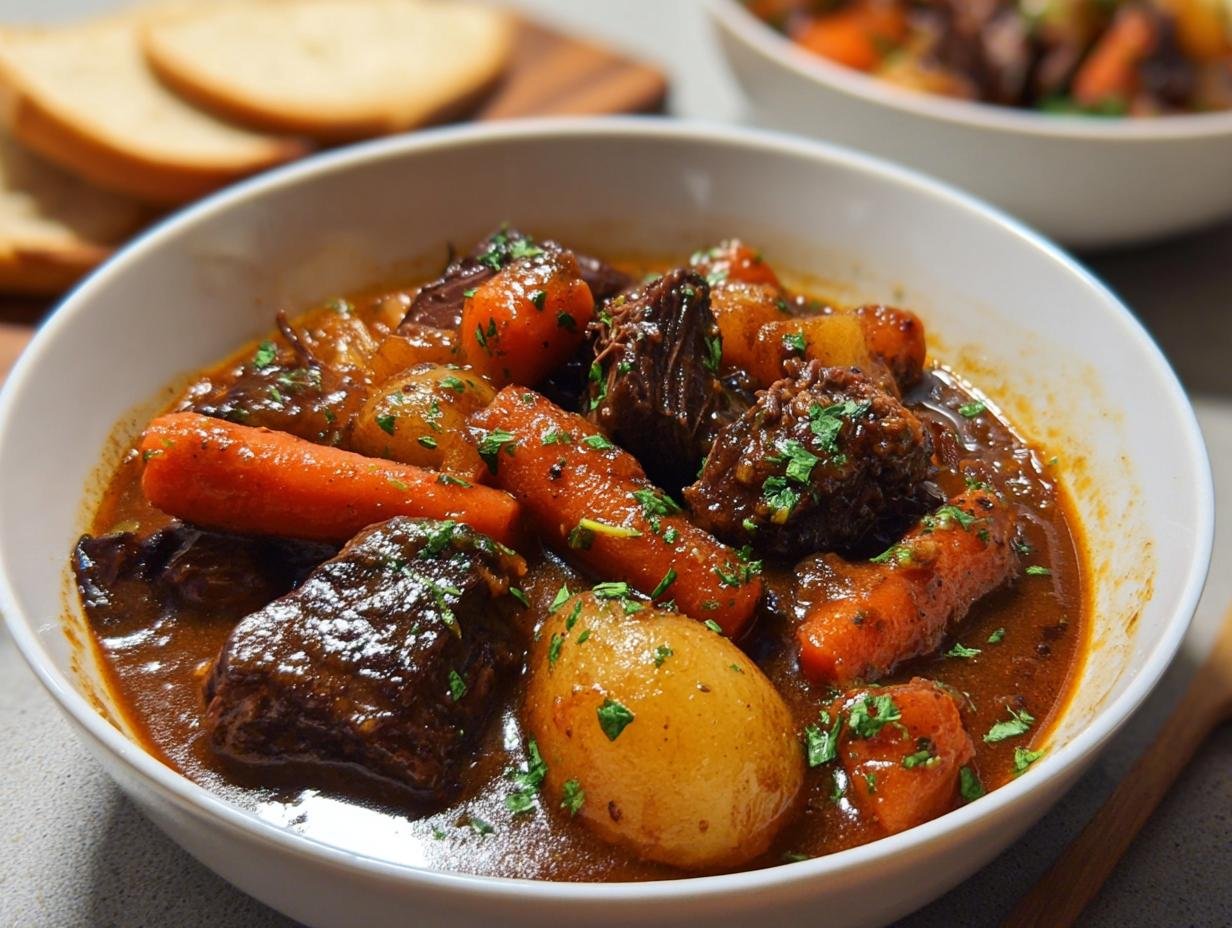
Oh, those glorious, massive holiday meals! I love the big feast, but I always get that slight stress the next day—what do I do with all that amazing Prime Rib? We can only eat it cold for so long, right? Well, I found the answer that turns that luxury meat into humble, soul-satisfying goodness. Making my Comforting Leftover Prime Rib Beef Stew is the perfect way to reset after all the holiday fanfare.
A few winters ago, after a long holiday weekend, I remember opening the fridge and finding just enough leftover prime rib to feel torn between snacking on it cold or turning it into something more meaningful. I chose the latter, and the aroma that filled the kitchen was unforgettable—rich broth simmering, vegetables softening, and the tenderness of the prime rib becoming the heart of the stew. That moment reminded me how comforting it feels to transform simple leftovers into a dish that warms both the body and the spirit. This slow-braised stew takes that expensive piece of meat and builds layer upon layer of deep savory flavor, promising warmth in every spoonful.
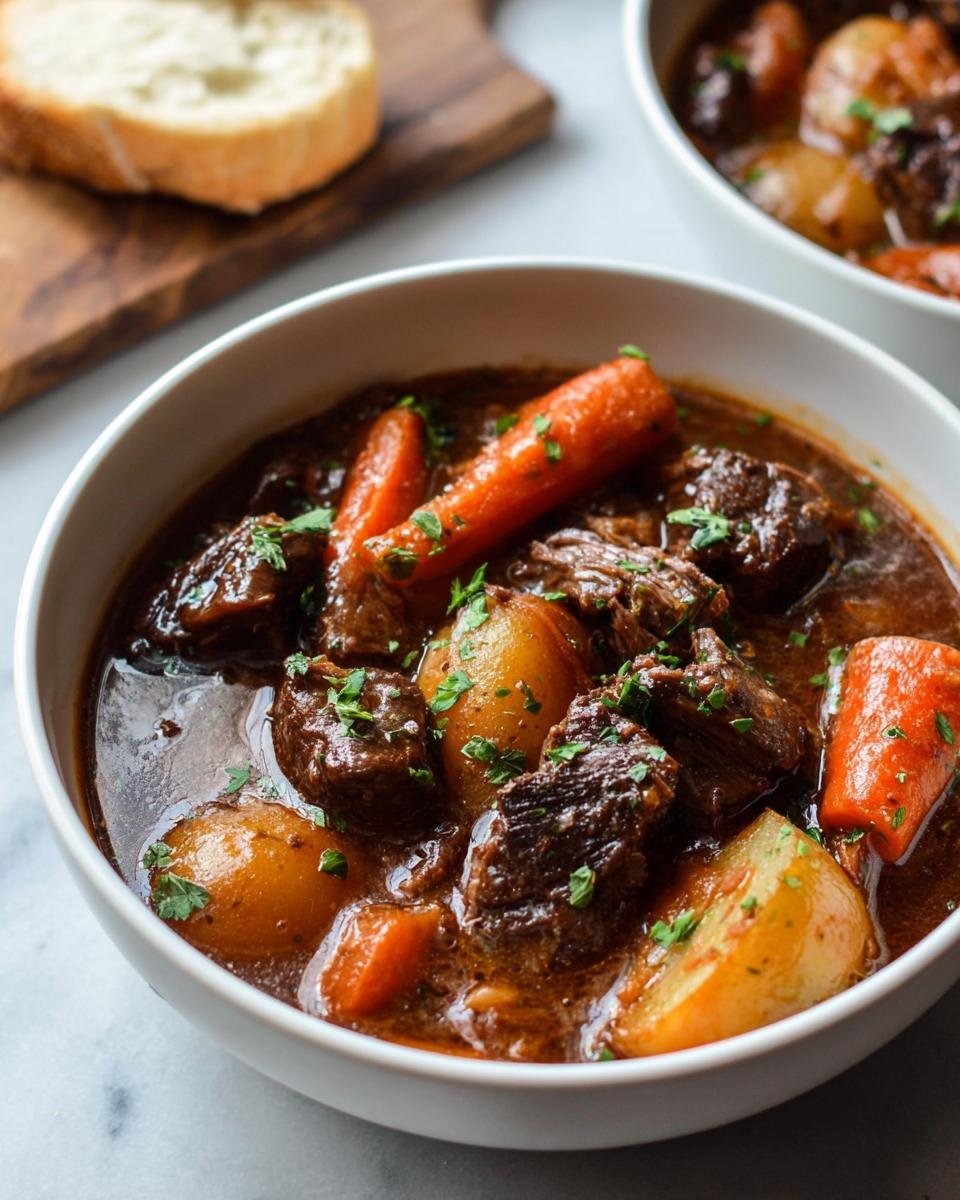
Why This Comforting Leftover Prime Rib Beef Stew Works Wonders
It feels like magic turning what looks like the end of a great meal into something even better, doesn’t it? Honestly, this stew is my favorite way to handle those final scraps of roast beef. Forget reheating slices thinly—we’re resurrecting that flavor into something hearty and new!
- It’s budget-smart cooking! You stretch that already cooked, high-quality Prime Rib across multiple cozy meals.
- The flavor is unbeatable because we’re using the slow-braising method which deepens everything.
- It’s pure, warming comfort that feels way more satisfying than just eating leftovers straight from the fridge. Check out how we do lightened-up comfort food for more ideas like this!
Maximizing Flavor from Leftover Prime Rib
If you just toss your leftover roast into a pot, you get meat that tastes like reheated roast. That’s not what we want! When we simmer that beef in the wine, broth, and aromatics, the leftover meat gets a second chance to absorb all those deep, savory flavors. It softens up beautifully, becoming impossibly tender in a way that microwaving just can’t achieve. It tastes like it cooked all day long, even though most of the heavy lifting was done during the initial roast!
Gathering Ingredients for Comforting Leftover Prime Rib Beef Stew
I know it looks like a long list, but trust me, most of this is pantry staples! We’re using the residual richness of your amazing roast and boosting it with foundational flavors. Having everything prepped before you start searing makes the whole process smooth sailing. If you love deep beef flavor, you might also want to look at my recipe for garlic butter beef later for another way to use up good cuts of meat!
For the Stew Base
This is where we build that thick, dark gravy that clings perfectly to the meat and vegetables. Make sure your beef is ready to go before you even turn on the stove!
- 3 pounds boneless beef chuck, well-marbled, cut into 1½-inch pieces (Even though we are using leftover beef, using chuck here sets the foundation for a great texture if you want to make the base recipe from scratch later!)
- 2 teaspoons salt
- 1 teaspoon freshly ground black pepper
- 3 tablespoons olive oil (divided)
- 2 medium yellow onions, cut into 1-inch chunks
- 7 cloves garlic, peeled and smashed (Don’t mince them; smashing releases the flavor slower!)
- 2 tablespoons balsamic vinegar
- 1.5 tablespoons tomato paste
- 0.25 cup all-purpose flour
- 2 cups dry red wine
- 2 cups beef broth
- 2 cups water
- 1 bay leaf
- 0.5 teaspoon dried thyme
- 1.5 teaspoons sugar (This just balances the acidity, don’t skip!)
Vegetables and Garnish
The vegetables are tough enough to withstand three hours of braising and will soak up all that incredible wine and beef flavor.
- 4 large carrots, peeled and cut into 1-inch chunks on a diagonal
- 1 pound small white potatoes (baby yukons), cut in half
- Fresh chopped parsley, for serving (optional, but it looks so bright!)
Step-by-Step Instructions for Your Comforting Leftover Prime Rib Beef Stew
Okay, let’s get this incredible aroma going! The key here is developing that rich background flavor *before* we add the liquids. We want a good, deep crust on that beef, even if it’s already cooked once. Don’t be shy with that heat!
Browning the Meat and Building the Base
First things first, get that oven warming up to 325°F (165°C) right away. Then, pat your pre-cut beef as dry as possible—wet meat steams, and we need searing action! Heat up one tablespoon of oil in your Dutch oven over medium-high heat. You’ll sear the meat in 3 separate batches, giving each piece about five minutes to get that nice brown crust. Remember to use tongs and add a little more oil for each batch so the pot stays hot. That crust is pure flavor gold!
Once the meat is out on a plate, drop the onions and smashed garlic right into the pot, along with the balsamic vinegar. Scrape up all those tasty brown bits stuck to the bottom—that’s called the fond, and it makes the stew taste like it simmered for days. Stir that for about five minutes until the onions soften up. Now, stir in the tomato paste, cook it for a minute, and then sprinkle in your flour. You must stir that flour around for a good minute or two until it’s totally mixed in and cooked out before adding anything wet. We don’t want any raw flour taste!
Braising and Vegetable Integration
Next, pour in your red wine, beef broth, water, thyme, sugar, and the bay leaf. Whisk everything together to make sure there are no clumps. Bring this glorious mixture to a boil right on the stovetop, then clap that lid on tight and slide the whole heavy pot into the oven. Let that braise for two full hours. This is where the magic happens and the flavors marry!
After those two hours, pull the pot out carefully. Toss in the carrots and those baby potatoes. Cover it back up and pop it in the oven for just one more hour, or until those veggies are soft when you poke them and the broth feels wonderfully thickened around the meat. Once done, for safety and taste, immediately remove that bay leaf and throw it out. If you want a super quick method, you can cook this stew right on the stovetop over the lowest setting for the whole time—check out tender braised short ribs for a similar low-and-slow stovetop technique! We also love roasting veggies on the side, check out my tips for oven roasted vegetables!
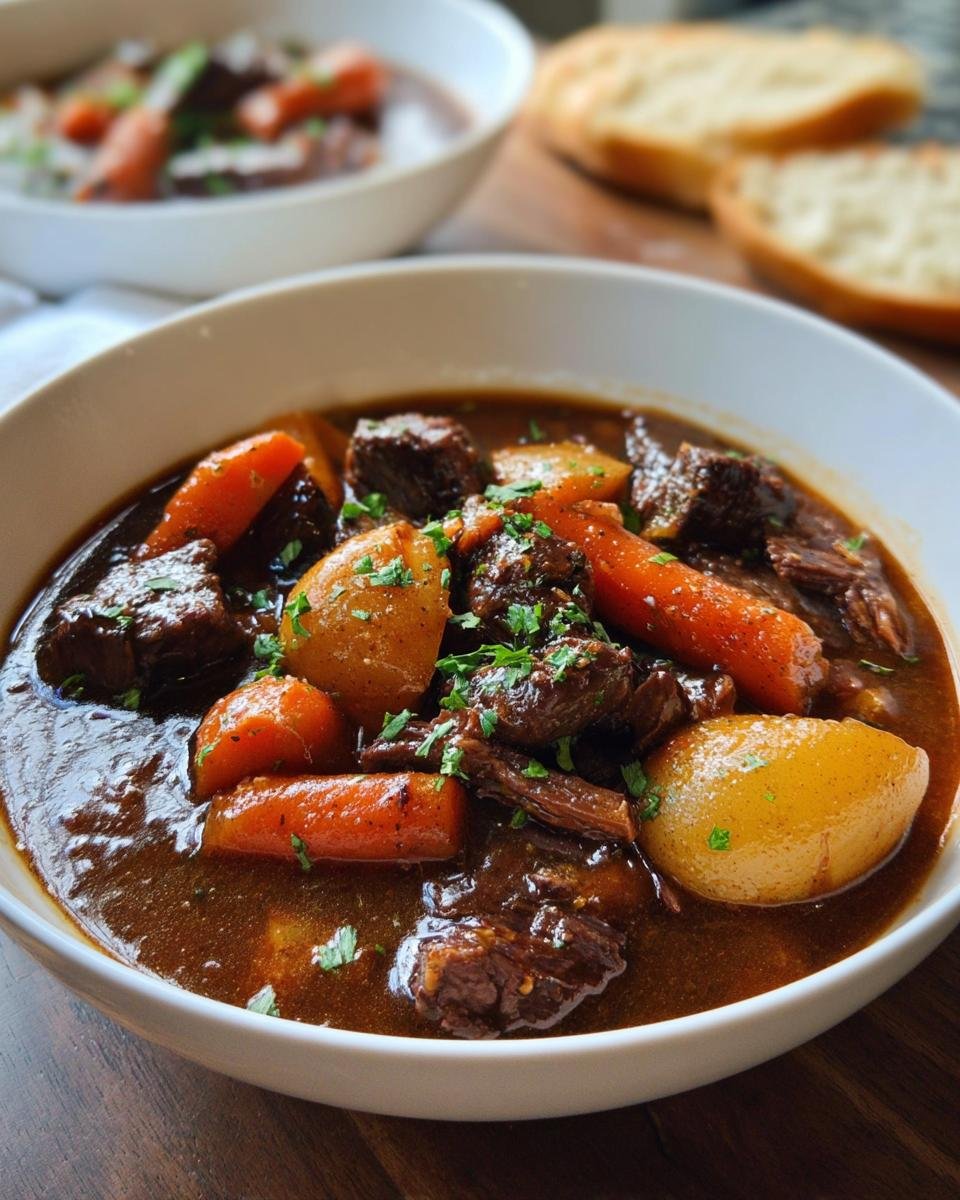
Expert Tips for Perfect Comforting Leftover Prime Rib Beef Stew
You’ve followed the steps, so now you’re almost at the finish line! This is where we fine-tune things. Sometimes the oven runs hot, or maybe your leftover beef had a different starting moisture level, so tasting and adjusting is crucial. I learned that when you’re working with slow-cooked meats, the final seasoning check is what really makes the dish sing. We want that rich flavor profile to pop, especially if you dipped into your leftover Gravy & Au Jus while prepping!
Achieving the Best Broth Consistency
That little bit of flour we stirred in earlier helps thicken things up as the starches gelatinize during the braise. If, after that final hour with the potatoes, you pull the lid off and the broth still looks a bit thin—like soup instead of stew—don’t panic! You have two easy options. If it’s only slightly watery, just take the lid off and let it simmer on the stovetop over medium heat for about 10 minutes. That evaporation will concentrate things beautifully. If it’s seriously thin, mix one tablespoon of cornstarch with two tablespoons of cold water to make a slurry, stir that into the simmering stew, and let it cook for five minutes until it thickens up perfectly.
Now, if you look in there and it seems *too* thick, almost like glue? That happens if you use really starchy potatoes. Just carefully stir in another half-cup of beef broth or even a splash of water until you get that lovely consistency where the liquid coats the back of a spoon but isn’t holding its shape.
The Advantage of Making This Stew Ahead
Listen to me on this one: If you can, make this Comforting Leftover Prime Rib Beef Stew a day ahead. I know, I know, waiting is the hardest part when you’re hungry! But I promise you, this stew gets exponentially better overnight. Think about it—the beef, the onions, the carrots, the wine, the thyme… they all spent the first night getting to know each other in the oven. When you cool it down and then reheat it the next day, all those magnificent flavors have had time to fully meld together.
When I make it ahead, the flavor isn’t just deeper; the meat seems even more fall-apart tender the next day. It’s the perfect way to prep for a low-stress weeknight dinner, especially after a busy holiday week. You just reheat gently on the stove, smell that amazing aroma fill your kitchen again, and enjoy the easiest, most comforting meal ever.
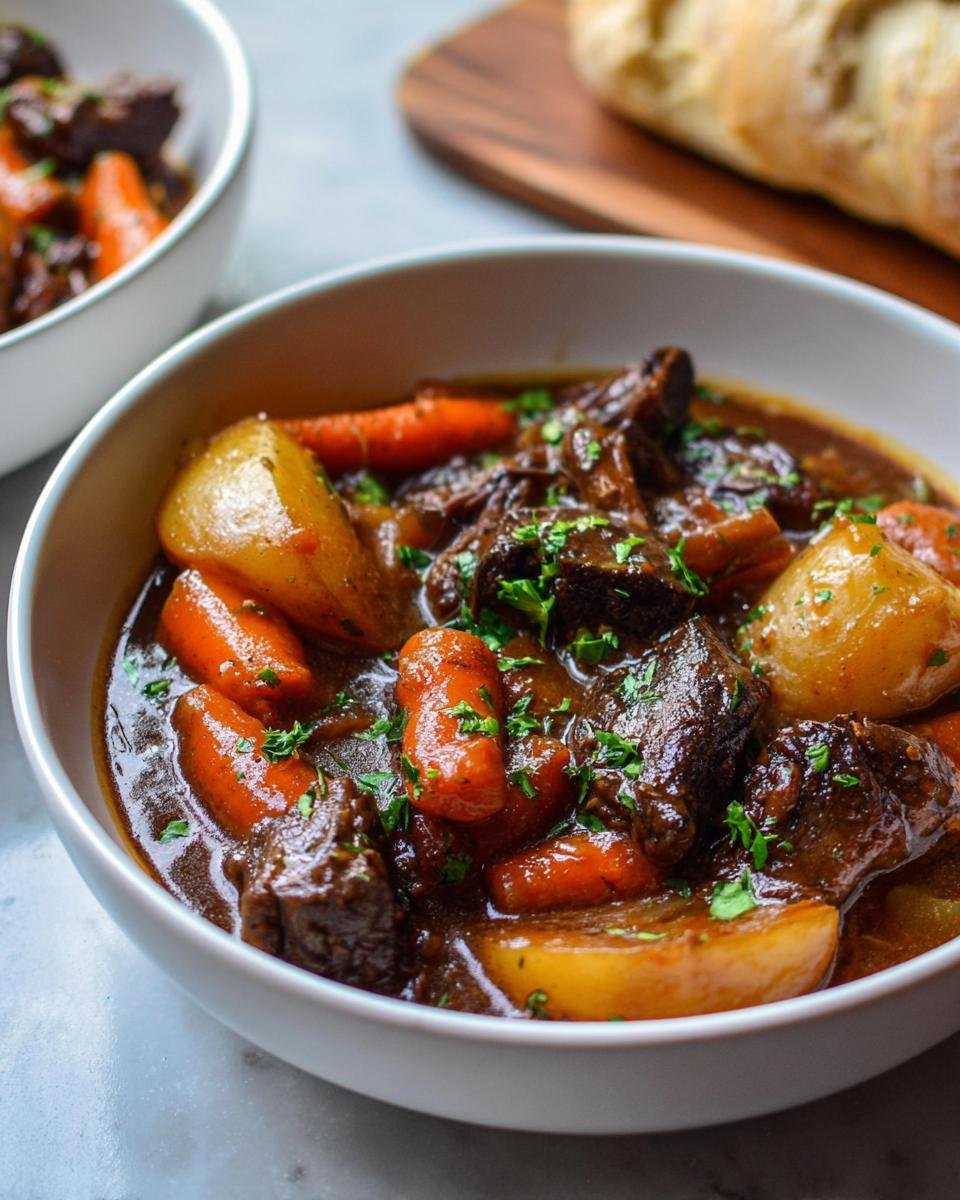
Storage and Reheating Instructions for Your Stew
We’ve made this amazing pot of beef stew, but sometimes life gets busy, right? Or maybe you just want that incredible flavor profile to hit its absolute peak, which means making it ahead of time! Don’t worry about leftovers; we have a solid plan for keeping this stew perfect for days.
If you’re planning on eating it within the next few days, refrigeration is your friend. Once the stew has cooled down to room temperature—and this is important, never put piping hot food directly into the fridge—transfer it into an airtight container. I usually use glass containers so I can see how much I have left! This stew is good in the fridge for up to 3 days. It solidifies a bit as it chills, which is totally normal because of all that good gelatin and softened vegetables.
Now, if you’ve got a mountain of this stuff and know you won’t get to it all quickly, let’s talk about the freezer. Freeze the stew only after it has cooled down completely. Scoop it into freezer-safe, airtight containers or heavy-duty freezer bags. If you use bags, lay them flat on a baking sheet while they freeze so they turn into neat little blocks you can stack up. It keeps beautifully for up to 3 months!
When it comes time to serve your frozen or refrigerated masterpiece, the stovetop is the easiest way to go. If it’s thawed overnight in the fridge, just pop it in your heavy pot over medium-low heat. You want to reheat it gently—covered—until it’s hot all the way through. Resist the urge to blast it on high heat; that can break down the tender beef too much. If you need to thin it out slightly when reheating from frozen, just stir in a splash of beef broth or water about halfway through the warming process. You’re going to love cracking the lid off and smelling that rich beef aroma again!
Serving Suggestions to Pair with Comforting Leftover Prime Rib Beef Stew
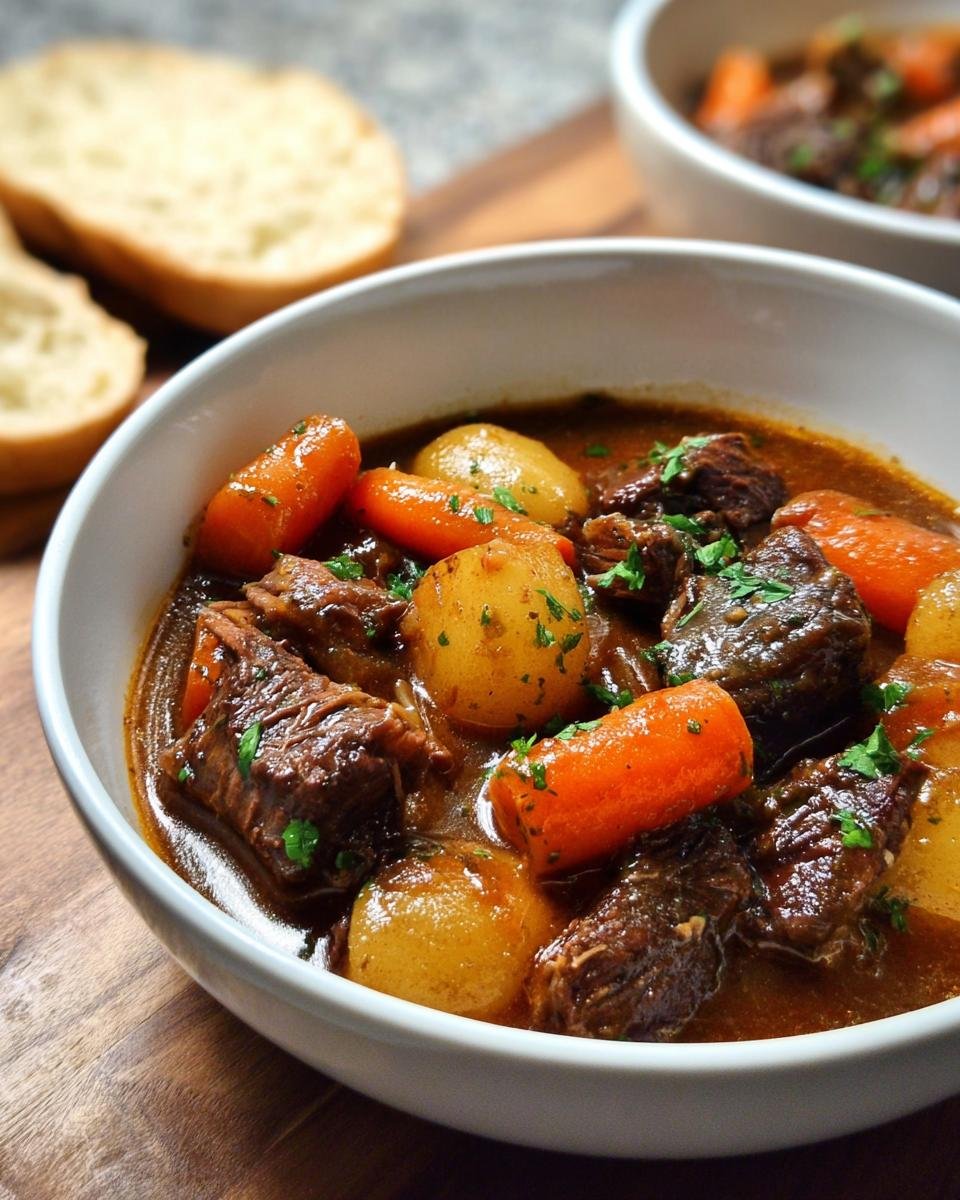
A stew this rich and flavorful deserves the perfect vehicle for soaking up every last drop of that gorgeous broth. Honestly, the star of the show for me will always be a great bread, especially when you’ve spent hours making that deep, savory broth. You absolutely need something sturdy!
Forget just plain toast! If you’ve got some cheddar chive dinner rolls fresh from the oven, you’re set. The sharp cheese cuts beautifully through the richness of the beef. And if you’re feeling ambitious but don’t want to commit to kneading, you should look into making no-knead skillet dinner rolls—they are ridiculously easy and perfect for dipping.
You could also serve this right over a mound of creamy mashed potatoes or even alongside a good scoop of leftover Yorkshire Pudding if you happened to have extra from your main event! Just make sure you have something ready to mop your bowl clean!
Frequently Asked Questions About Leftover Prime Rib Recipes
I know you might have a few questions running through your head, especially if you’re trying to figure out how to use up that last bit of roast or if you have some other leftovers from the big holiday meal! It’s totally normal to wonder about substitutions. Let’s clear up some common concerns about making the best stew possible.
Can I use Roast Turkey or Holiday Ham instead of Prime Rib?
That’s a great question! Yes, you absolutely *can* use leftover Roast Turkey or even that small piece of Holiday Ham you have tucked away. The method for braising vegetables in the Dutch oven will work perfectly fine. However, you have to adjust your expectations on flavor. Beef has a totally different richness than poultry or pork. If you use turkey, I strongly recommend swapping the red wine entirely for white wine or even just extra chicken or beef broth. You might also want to lean a bit heavier on herbs like rosemary or sage instead of thyme to better match the poultry flavor. It will be a great stew, but it won’t taste exactly like the Prime Rib version.
What if I don’t have red wine for the Comforting Leftover Prime Rib Beef Stew?
Oh dear, no red wine? Don’t let that stop you for one second! The wine does a wonderful job of adding acidity and depth, and we want to replicate that kick so the final stew isn’t flat. For a perfect substitute in your Comforting Leftover Prime Rib Beef Stew, just use an additional cup of beef broth—that covers the liquid volume. To replace the necessary acid that the wine brings, whisk in about two tablespoons of Worcestershire sauce or a splash extra of balsamic vinegar along with the broth. That gives you that necessary tang that brightens up the whole pot. If you have some leftover Gravy & Au Jus, that can also sneak in here for extra beefy flavor!
Can I use Mashed Potatoes or Green Bean Casserole in the stew?
While I adore both Mashed Potatoes and Green Bean Casserole, I would strongly advise against mixing those directly into the braise. The potatoes will break down instantly and make your broth gummy, and the casserole introduces cream of mushroom soup flavors that don’t quite marry with the savory prime rib base. Instead, serve those leftovers *on the side*! The stew is fantastic served over a dollop of creamy mashed potatoes, or you could even scoop some of the plain stew sauce over a small serving of the casserole later. You can find some other great methods for using up those holiday sides by checking out my Beef Manhattan recipe, which uses leftover beef similarly.
Nutritional Estimates for Comforting Leftover Prime Rib Beef Stew
I always love looking at the nutrition breakdown after a big, comforting meal like this stew—it proves you don’t need to sacrifice goodness for satisfaction! I put together the estimated numbers below based on the ingredients we used. Remember, since we’re using leftover meat and vegetables, your exact values might shift a bit, but this gives you a great ballpark idea of how hearty this dish is!
- Calories: 550
- Protein: 45g
- Fat: 28g (10g Saturated)
- Carbohydrates: 30g (5g Fiber)
See that protein count? That’s the power of great Prime Rib working for you! If you’re tracking macros or looking for great calorie smart recipes, this fits right in. Enjoy that rich flavor knowing you’re eating well!
Share Your Comforting Leftover Prime Rib Beef Stew Experience
Wow, we made it through! I truly hope that making this rich, savory Comforting Leftover Prime Rib Beef Stew fills your home with the best kind of warmth. There’s nothing better than turning those holiday remnants into an incredible, hearty dinner.
Now, I’d really, really love to hear how it turned out for you! Did the beef get as ridiculously tender as mine always does? Did you manage to save some for the next day? Please pop down below and leave a star rating for the recipe—it helps me know what’s working best in your kitchens.
If you made any little tweaks—maybe you added some mushrooms or used leftover Cranberry Sauce in the braise for a touch of tang (don’t judge, I love experimenting!)—please tell me all about it in the comments! I absolutely crave seeing your kitchen creations, so snap a picture of your bowl of stew and share it with me over on social media. Tag me so I don’t miss seeing how you enjoyed every last drop!
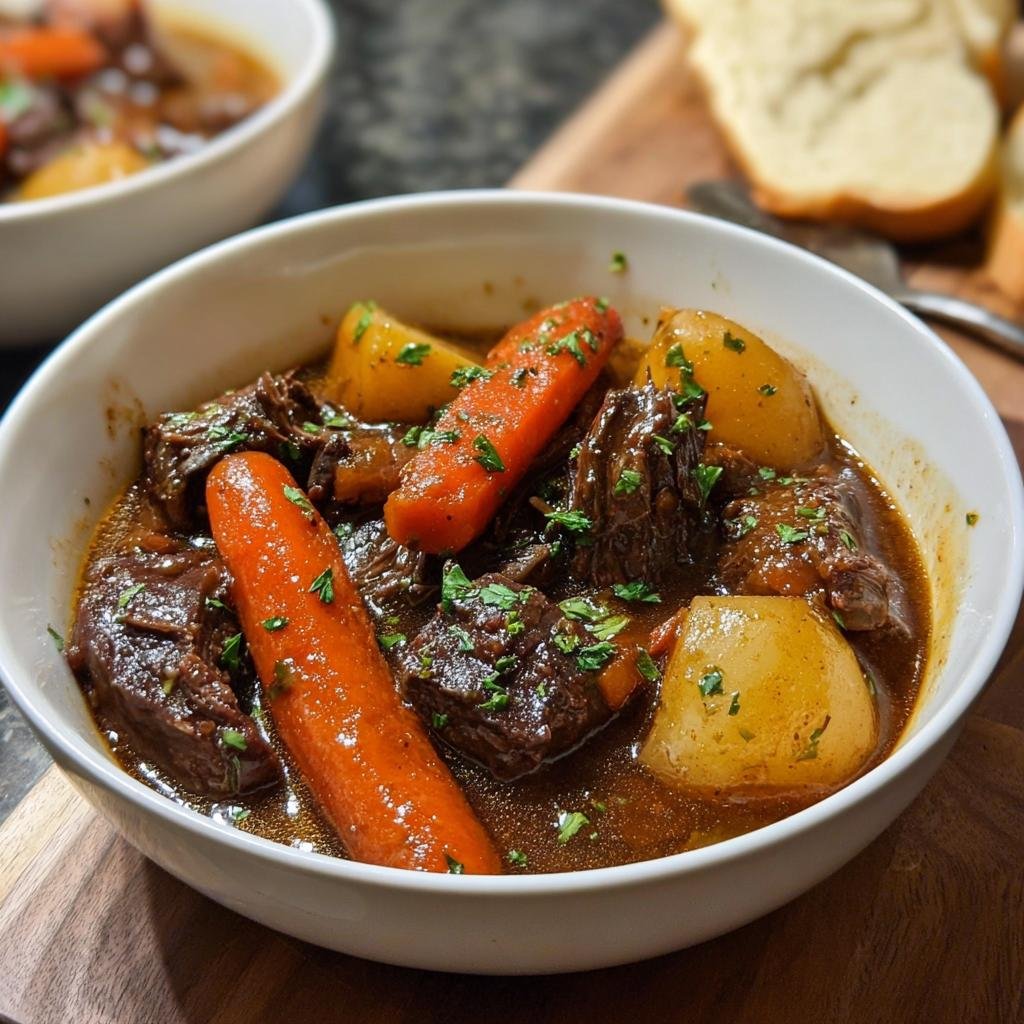
Comforting Leftover Prime Rib Beef Stew
Ingredients
Equipment
Method
- Preheat the oven to 325°F (165°C) and set a rack in the lower middle position.
- Pat the beef dry and season with the salt and pepper. In a large Dutch oven or heavy soup pot, heat 1 tablespoon of the olive oil over medium-high heat until hot and shimmering. Brown the meat in 3 batches, turning with tongs, for about 5 minutes per batch; add one tablespoon more oil for each batch. Do not crowd the pan and let the meat develop a brown crust before turning with tongs. Transfer the meat to a large plate and set aside.
- Add the onions, garlic and balsamic vinegar; cook, stirring with a wooden spoon and scraping the brown bits from the bottom of the pan, for about 5 minutes. Add the tomato paste and cook for a minute more. Add the beef with its juices back to the pan and sprinkle with the flour. Stir with wooden spoon until the flour is dissolved, 1 to 2 minutes.
- Add the wine, beef broth, water, bay leaf, thyme, and sugar. Stir with a wooden spoon to loosen any brown bits from the bottom of the pan and bring to a boil. Cover the pot with a lid, transfer to the preheated oven, and braise for 2 hours.
- Remove the pot from the oven and add the carrots and potatoes. Cover and place back in the oven for about an hour more, or until the vegetables are cooked, the broth is thickened, and the meat is tender. Remove the bay leaf and discard. Taste and adjust seasoning if needed.
- Serve the stew warm, or let it cool to room temperature and store it in the refrigerator until ready to serve. This stew tastes better if made at least 1 day ahead. Reheat, covered, over medium heat. Garnish with fresh parsley, if you want.