
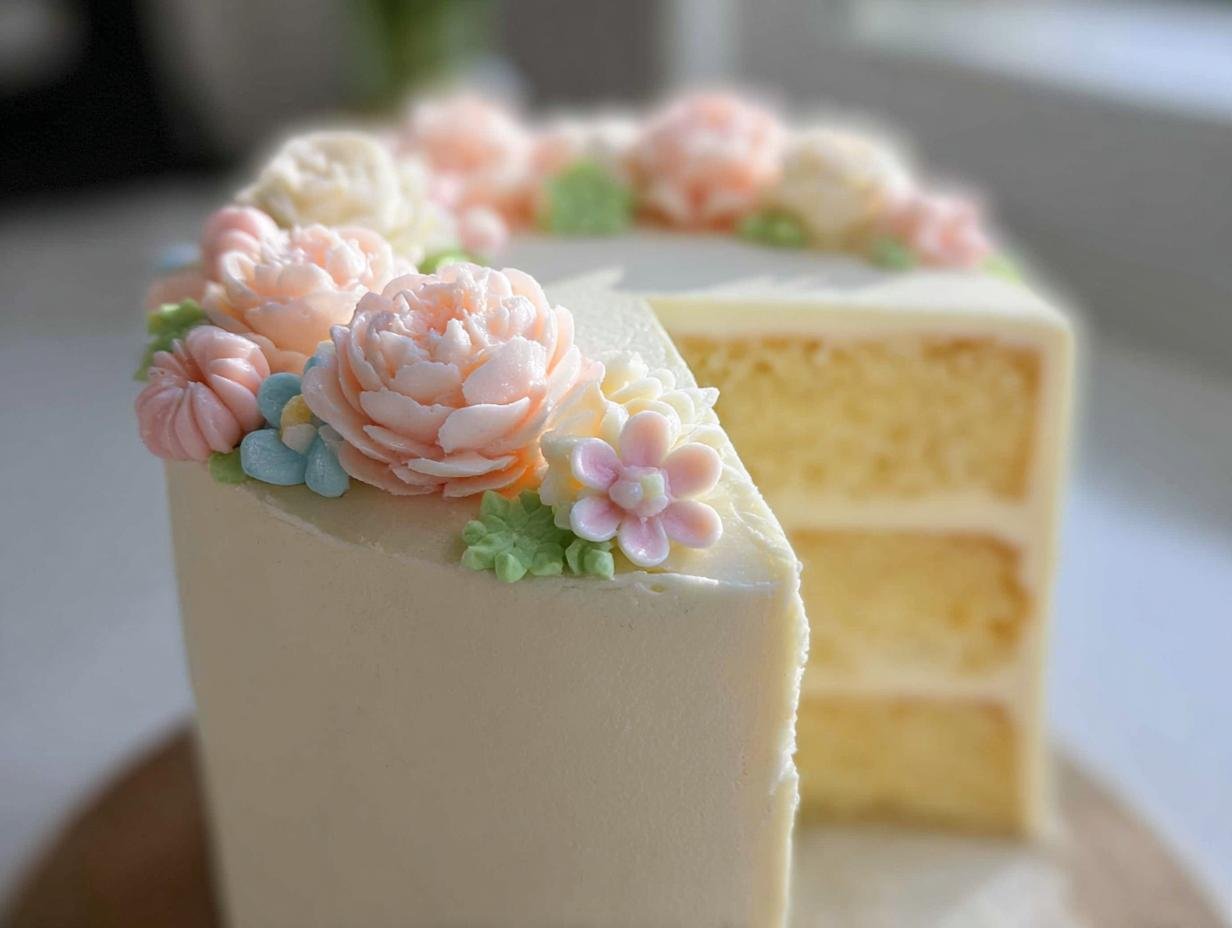
When you’re baking for a real milestone—a birthday, an anniversary, or just a gorgeous spring afternoon—you need a cake that screams special occasion, but tastes light and fresh, not heavy. Seriously, forget those dense, overly sweet things! The magic here is combining bright, zesty lemon with the most delicate, floral notes of elderflower. It’s breathtakingly good.
The first time I tasted a lemon-elderflower cake was at a small spring garden party hosted by a friend who adored floral desserts. I remember how the bright citrus lifted the delicate elderflower notes, making each bite feel like sunshine. Since then, this flavor combination has become my go-to whenever I want a dessert that feels joyful and meaningful—something that turns a simple gathering into a true celebration. Trust me, this Lemon Elderflower Celebration Cake is going to be your new favorite showstopper.
Why This Lemon Elderflower Celebration Cake is Perfect for Your Next Party
Honestly, this cake is just pure joy on a plate! If you’re looking for stunning Cake Ideas for your next big event, stop scrolling right now. This recipe is designed to feel special but bake up remarkably well, even if you’re new to layer cakes.
- It’s light and refreshing—perfect for a spring or summer party!
- The lemon cuts through the sweetness of the frosting beautifully.
- The layered look makes an incredible centerpiece for any celebration.
- The Lemon Elderflower Celebration Cake feels sophisticated without being too complicated to decorate!
We use it for everything now because it always gets rave reviews. Check out how I managed those tricky cream cheese frostings on other recipes if you need a solid base!
Essential Equipment for Your Lemon Elderflower Celebration Cake
Okay, let’s talk tools! Because we are building a spectacular layer cake here, precision makes a huge difference, especially with the delicate Swiss meringue frosting. Don’t panic if you don’t have everything, but these items really help take the guesswork out of things.
You’ll definitely want to pull out your trusty standing mixer. I mean, you *could* try to whip all that egg white meringue by hand, but honestly, why break an arm when you have a machine that loves hard work?
- Standing Mixer: This is non-negotiable for making that light, fluffy Swiss Meringue Buttercream. It saves your wrists!
- Three 6-inch Cake Pans: This recipe is sized perfectly for three thinner layers, which gives you that gorgeous height when stacked. If you’re using different sizes, make sure you adjust your baking time!
- Kitchen Scale: My biggest piece of advice across all my baking posts! Measuring flour and sugar by weight is so much more accurate than by volume. You’ll get straighter layers this way, promise.
- Piping Bags and Piping Nail: These are key if you want to try the pretty floral decorations at the end. You don’t need a million tips—just the ones specified for the leaves and petals.
Also, don’t forget your basic setup: bowls, a whisk, a rubber spatula for scraping, and those handy damp baking strips if you want truly flat edges straight out of the oven. Prepping your gear first makes the whole process flow so much smoother!
Ingredients for the Perfect Lemon Elderflower Celebration Cake
I know, I know, it looks like a lot of lists, but breaking it down makes it totally manageable! We are essentially making four different things here: the cake, the bright, tart filling, the silky smooth structural frosting, and the colorful topping frosting.
Don’t skip the notes on temperature! Having things like your milk, sour cream, and especially the butter for the Swiss Meringue at true room temperature is what separates a good cake from a *great* one. For the curd, chilling that butter beforehand is the trick that makes it set just right. If you need some great tips on timing your prep work, check out my thoughts on getting cider chicken ready, because that process involves timing too!
For the Cake Layers
We need 2 1/4 cups of cake flour (about 335g), 1 1/4 cups of sugar (235g), one heaping teaspoon of baking powder, and a teaspoon of kosher salt for the dry stuff. For the wet components, grab 2/3 cup of room temperature whole milk (160ml), 1/4 cup of room temperature sour cream (60ml), 6 large room temperature egg whites, 3 tablespoons of elderflower syrup, the zest of one lemon, 1/3 cup of lemon juice (80ml), and 3/4 cup (176g) of room temperature unsalted butter.
For the Bright Lemon Curd Filling
This filling needs 6 egg yolks (strained!), 1/3 cup (80ml) of freshly strained lemon juice, 1 cup of sugar (228g), and 1/2 cup (115g) of chilled, cubed unsalted butter. That chilling step makes the curd thicken beautifully once it hits the heat!
For the Swiss Meringue Buttercream
For the main frosting that coats the outside, grab 5 room temperature egg whites, 2 cups (452g) of room temperature unsalted butter, 1 1/2 cups of sugar (300g), a pinch of salt, and 3 tablespoons of elderflower syrup. Watch that butter temperature here—it’s crucial for a stable, gorgeous finish!
For the American Buttercream & Decoration
To make the gorgeous little roses and leaves, you just need 1 cup (225g) of room temperature unsalted butter, 1.5 lbs (460g) of sifted confectioners’ sugar, 1 teaspoon of rose water, and your food coloring—pink, yellow, orange—plus a tiny bit of matcha powder for that natural green leaf color.
Step-by-Step Baking Instructions for Your Lemon Elderflower Celebration Cake
This might look like a lot of steps, but honestly, once you get into the rhythm, it flies by! We’ll tackle the baking first, then move on to those luscious fillings and frostings. Remember what I said about cake strips? If you’re using them here, it helps keep those layers flat so you don’t have to trim off too much cake later. If you struggle with flat layers, you might want to check out my tips for oatmeal apple cake success, because those same principles apply!
Preparing and Baking the Cake Layers
Start by preheating that oven to 350F, which is necessary before you do anything else! Make sure those three 6-inch cake pans are buttered, floured, and lined with those damp baking strips we talked about. In your mixer, sift together the flour, sugar, baking powder, and salt—whisk it up nice and dry. Separately, whisk your egg whites, milk, sour cream, elderflower syrup, lemon zest, and juice together. Now, use the paddle attachment and add the softened butter to your dry ingredients in pieces. Once it looks crumbly, switch to the whisk attachment and add half of your wet mixture, mixing until just combined. Scrape down the sides like crazy, then add the rest of the wet stuff and mix until it’s smooth. Pour that lovely batter evenly into your pans—using a kitchen scale here ensures they bake up evenly like in my apple dapple cake recipe! Bake for about 33 to 36 minutes.

Making the Tangy Lemon Curd
While those layers are cooling for about five minutes before coming out onto the rack, let’s make the filling! Cut your chilled butter into cubes and get ready to whisk those egg yolks with the sugar until they lighten up a bit. Add your freshly strained lemon juice. Now, the tricky part: transfer everything to a bowl set over medium-low simmering water—don’t let the water touch the bottom! Whisk constantly until that glossy mixture hits 170F; when you draw your finger across the back of a spoon, the line should hold perfectly. Take it off the heat, whisk in the cold butter cubes one by one till it’s smooth, then cover it plastic wrap right against the surface and get it chilling for a few hours. It needs to be firm for assembly!
Creating the Swiss Meringue Buttercream
This is the silk you want! Put your egg whites, salt, and sugar into a bowl over simmering water, making sure it doesn’t touch. Whisk this until it reaches 160ºF, feeling grainy between your fingers, and then immediately get it onto your stand mixer with the paddle. Whip it until it’s cool to the touch and forms gorgeous, stiff, glossy peaks. Now, slow down the mixer and introduce your room temperature butter, tablespoon by tablespoon. If you rush this, it will look curdled, so be patient! Only add the next piece when the last one is totally incorporated. Finish it off by mixing in the elderflower syrup.
Mixing the American Buttercream for Flowers
This frosting needs to be way stiffer than the Swiss meringue so it holds its beautiful shape! In the mixer, cream your room temperature butter until smooth. Slowly sift in all that confectioners’ sugar a bit at a time. Once it’s thick, add the rose water and divide the frosting. Dye a portion yellow, some pink, and use the matcha powder to make your green coloring for the leaves. You want this stiff enough to stick right up on a piping nail!
Assembling the Layer Cake
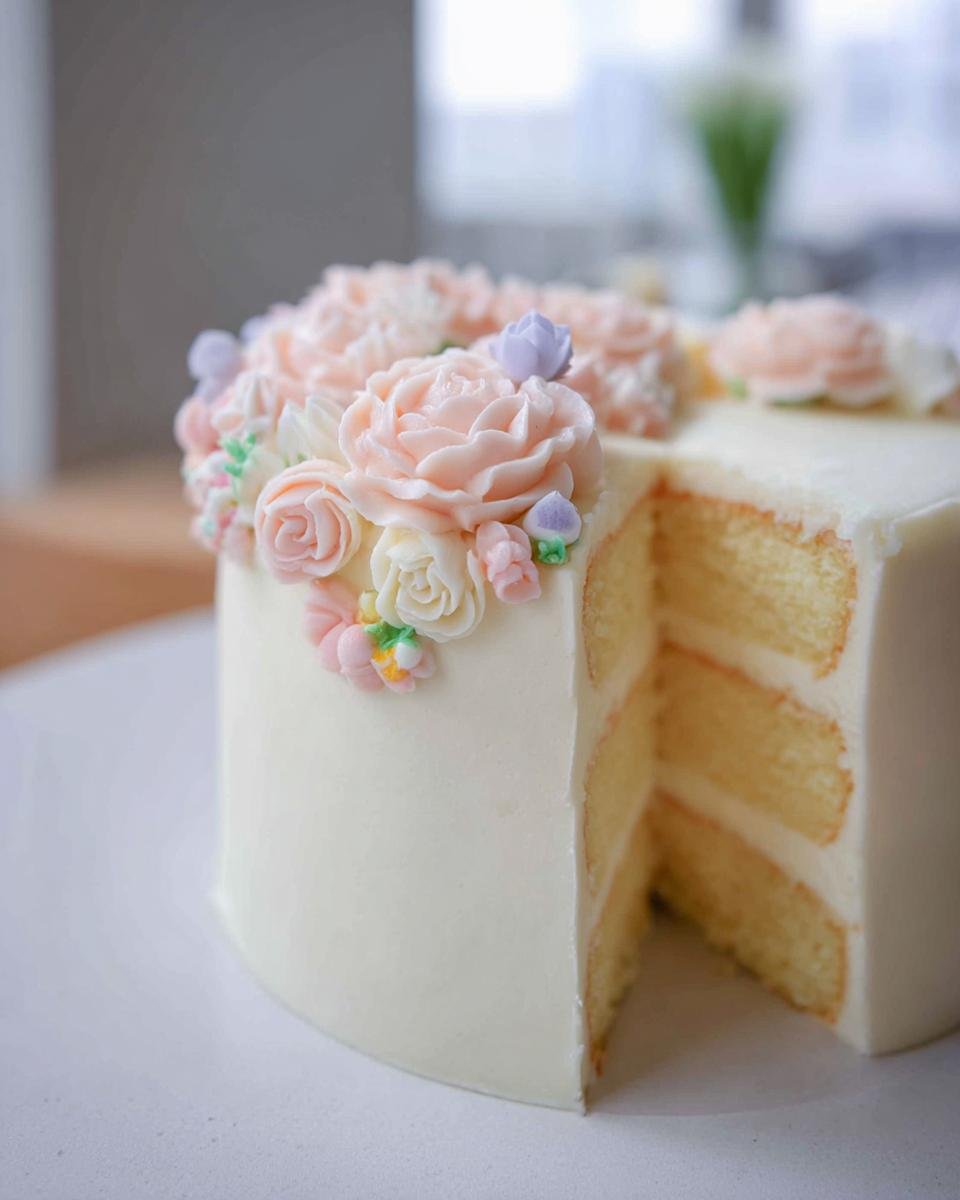
When the cake layers are totally cool, it’s time to build this beauty—the structure is key for this Lemon Elderflower Celebration Cake! Take your first layer and pipe a thick dam wall of the Swiss buttercream around the edge. This is crucial so the curd doesn’t ooze out! Fill that well with your chilled lemon curd, then top with the next layer and repeat. Chill the whole stack for a quick 10 minutes to firm things up. Then, coat the entire outside crumb with a thin layer of the Swiss buttercream—this is your crumb coat. Smooth it out, chill it again until firm, and then apply your final, thicker layer of Swiss buttercream and smooth it with a bench scraper. Finally, pipe that crescent ring of Swiss on top and carefully transfer your colorful roses and piped leaves onto the ring. Keep that finished cake cool until serving!
Tips for Success When Making a Lemon Elderflower Celebration Cake
Baking a cake that looks and tastes this refined takes a little patience, but I promise, it’s worth every second. I’ve made every mistake possible over the years, so here are the three biggest things I learned that keep my cakes firm, moist, and my frosting smooth as silk.
First, don’t try to rush the chilling! Layer cakes fall apart if you try to frost them when they are too warm, especially when you’re dealing with a creamy filling like lemon curd. That quick 10-minute chill between the curd layer and the crumb coat is your best friend. If you’re in a super warm kitchen, let it chill for 15 or 20—it’s better to wait than have a leaning tower of cake!
The Crucial Role of Butter Temperature
This might sound repetitive, but I can’t stress this enough, especially for the two different buttercreams. For the American Buttercream used on the flowers, the butter should be totally soft—like, you can easily mash it with a spoon. But for that beautiful Swiss Meringue? The butter *must* be just slightly cool to the touch. If your butter is too warm when added, the meringue will break and you’ll end up with silky soup instead of gorgeous frosting. If it looks ugly, just keep whipping! Sometimes it takes a full five minutes of whipping the broken-looking mixture before it snaps back into creamy perfection. You can find an entire breakdown of how I troubleshoot broken batches over in my post about apple pie cheesecake bars!
Don’t Overmix the Cake Batter
When you switch from the paddle to the whisk attachment and start combining the wet and dry mixtures, you are flirting with developing tough gluten, which is the enemy of a tender cake. As soon as you see the last streaks of flour disappear, stop the mixer immediately. I honestly lift the bowl out and give it one or two final folds with my rubber spatula just to be sure. We want light, fluffy layers, not something you could use to patch concrete!
Use Quality Elderflower Syrup
Since elderflower is the star flavor here, the quality of the syrup is important! If you just dump in any cheap syrup, you’ll get an artificial taste that clashes with the fresh lemon. Look for a reputable brand or, even better, try making your own using fresh elderflowers if they are in season. This little flavor note is what elevates this from a nice layer cake to that sophisticated dessert everyone remembers.
Ingredient Substitutions for Your Lemon Elderflower Celebration Cake
I know sometimes you look at a recipe and think, “Darn, I’m out of sour cream,” or maybe elderflower syrup just isn’t in the baking aisle where you shop. That’s totally okay! While I insist that you try this recipe exactly as written at least once, there are a few swaps you can make that keep the spirit of this beautiful Lemon Elderflower Celebration Cake alive.
The main thing to remember when substituting in baking, especially for something delicate like this layer cake, is that you are usually swapping texture or moisture. If you want pointers on how to handle these swaps while maintaining that smooth frosting structure, you absolutely must read my troubleshooting post on caramel apple cheesecake bars—the same rule applies when your buttercreams start acting temperamental!
Swapping out the Sour Cream
The sour cream is there to add a bit of fat and a lovely, slight tang that balances the sugar and lemon. If you don’t have it, don’t worry! You can use whole milk yogurt as a direct 1:1 substitute. Just make sure it’s the full-fat kind so you don’t sacrifice too much richness in that cake layer! If you only have plain yogurt, letting it strain in a coffee filter for about 30 minutes can help remove some excess liquid, which is usually helpful.
Elderflower Syrup Alternatives
If you can’t find any elderflower syrup, that’s a bit trickier because it carries such a unique floral note! If you are looking to keep it alcohol-free, you can substitute the syrup quantity with plain simple syrup (equal parts water and sugar, heated until dissolved) combined with a tiny dash—and I mean tiny—of almond extract. You are trying to mimic a delicate floral essence, and almond can sometimes give that impression but use it sparingly!
If the floral aspect isn’t as important to you as the booze factor, you can certainly substitute the elderflower syrup in the cake layers with high-quality Limoncello or Cointreau, but leave out the almond extract. That will give you a lovely boozy, citrus warm note wonderfully suited for a celebration!
What to Do If You Don’t Have Cake Flour
Cake flour is great because it makes the cake layers so fine and tender, but if you’re in a pinch, you can make your own substitute easily! For every cup of cake flour you need, measure out one cup of regular all-purpose flour, then remove about two tablespoons of that flour. Whisk in two tablespoons of cornstarch until everything is perfectly combined. This mimics the lower protein content of cake flour, keeping your crumb soft and beginner friendly.
Storage and Reheating Instructions for the Layer Cake
Okay, once you’ve gone to all this work creating a masterpiece, we need to make sure it lasts! Storing a delicate cake with both Swiss meringue and lemon curd inside requires a little bit of care, especially if you live in a humid climate. The good news is that since this is a substantial layer cake, it holds up beautifully, but temperature matters.
For short-term storage, keeping this cake in the refrigerator is absolutely the safest bet, especially because of that rich lemon curd filling. Always cover it loosely, maybe with a cake dome or placing a large bowl over it, so the frosting doesn’t dry out or pick up any weird fridge smells. I usually keep mine in the fridge for up to three days.
Bringing Buttercream Frosting Back to Perfect Texture
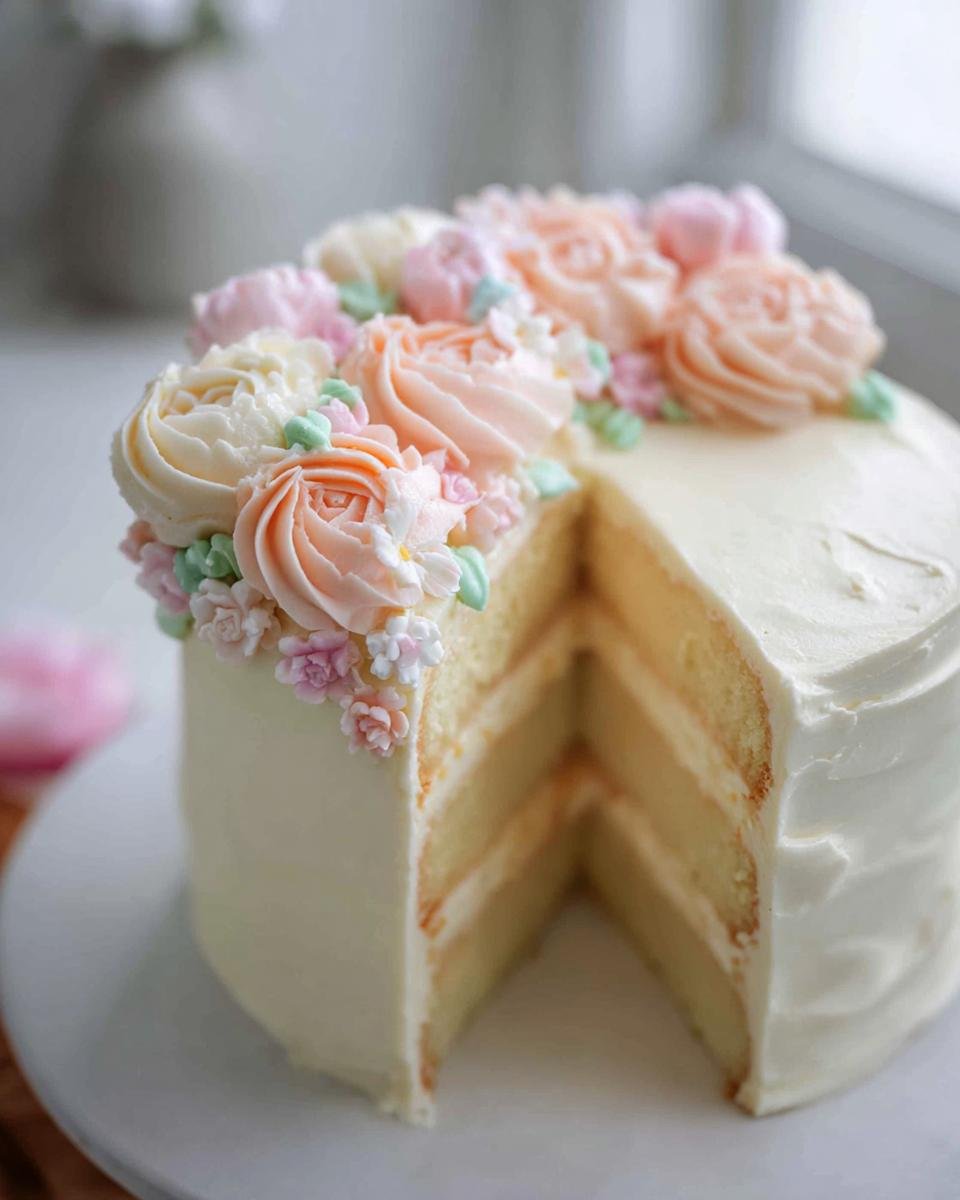
This is the step everyone messes up! When you take the cake out of the fridge, that Swiss meringue frosting will feel stiff and a little dense—don’t worry! Before you even think about slicing it, let the cake sit out on the counter, still covered, for at least an hour, maybe two if your kitchen is cool. This warming time allows the butter in the frosting to soften perfectly, returning it to that creamy, luxurious texture we worked so hard to achieve.
The lemon curd inside will also soften slightly, becoming perfectly spoonable again. Do not try to serve this straight from the fridge; it ends up tasting flat and the texture is too firm!
Freezing Leftover Cake Slices
If, by some miracle, you have leftovers, you can freeze individual slices better than the whole cake. Wrap each slice tightly first in plastic wrap, then in aluminum foil. This double wrapping keeps freezer burn away. When you want to enjoy a slice later, just unwrap it and let it thaw overnight in the refrigerator before bringing it out to room temperature for an hour before eating! That way, it tastes almost as good as the first day!
How to Keep the Decorations Fresh
If you did those gorgeous American Buttercream roses early, keep them separate in a dry, cool spot. If you’ve already placed them on the cake, the flowers will be fine stored in the fridge alongside the rest of the cake for a few days. However, if you are planning a party more than three days out, I’d suggest piping the flowers the day before and just putting them on right before serving so they look their absolute freshest!
Frequently Asked Questions About This Beginner Friendly Lemon Elderflower Celebration Cake
I always get so many questions after posting a big project like this, so I gathered the ones I hear most often! Don’t let the list of components scare you; we’ll break down where you can save time.
Can I make the components of the Lemon Elderflower Celebration Cake ahead of time?
Oh yes, absolutely! This is key for making the final assembly day easy. You can make the Lemon Curd filling up to three days ahead and store it tightly covered in the fridge. The Swiss Meringue Buttercream will also hold up beautifully for three days in the fridge once wrapped tight. Just let it sit on the counter, maybe whip it again for 30 seconds before using, and you’re good to go!
Is this layer cake truly beginner friendly?
I included this recipe because I genuinely believe it’s achievable for most bakers, so it is beginner friendly in terms of flavor, but I won’t lie—it has tricky spots! The cake layers themselves are simple if you follow the mixing order. The real challenge for a beginner is the Swiss Meringue Buttercream, which requires temperature checking and patience while adding the butter. If that feels too much, just stick to a simple American buttercream frosting!
What can I use instead of elderflower syrup?
If you can’t get your hands on elderflower syrup, I have a good substitute idea so you can still make this spectacular Lemon Elderflower Celebration Cake! You can create a simple syrup (equal parts water and sugar heated until dissolved) and add just a tiny splash—maybe a quarter teaspoon—of almond extract. It gives you a similar delicate floral/nutty background note that works so well, though it won’t be exactly the same!

Need more help whipping up tricky buttercreams? I share a lot of troubleshooting tips on frosting stability over in my notes about cottage cheese cookie dough!
Share Your Beautiful Lemon Elderflower Celebration Cake Creation
Now, the hardest part is over! You’ve mixed, baked, chilled, frosted, and decorated this magnificent cake. I truly hope serving your Lemon Elderflower Celebration Cake brought so much joy to whomever you were celebrating! When you’ve put this much love into baking, you absolutely have to share the results!
Please, don’t keep the beauty to yourself! I want to see every single perfect petal on those American Buttercream roses. Take a picture of your finished layer cake and tag me on Instagram or Facebook! Seeing your creations pops up in my feed and makes my whole week better. If you made any little changes or substitutions, like using the Limoncello instead of the syrup, let everyone know!
Rate This Recipe and Leave a Comment!
If you found this recipe helpful, or if the Swiss Meringue finally cooperated for you, would you mind taking 30 seconds to leave a quick star rating right here on the page? Those ratings really help other bakers know what to expect. And if you struggled with something—maybe the curd was too runny, or your frosting broke—please leave a detailed comment below! I read every single one, and knowing where readers get stuck helps me update my tutorials, just like how I keep adding clearer steps for things like pumpkin overnight oats.
When you leave comments, it starts a great conversation in our little baking corner of the internet. We share tips on humidity control, pan sizes, and where to find the best elderflower syrup! I can’t wait to hear how your spring garden party celebration turned out!

Lemon Elderflower Celebration Cake
Ingredients
Equipment
Method
- Preheat the oven to 350F. Butter and flour three 6-inch cake pans. Add damp baking strips.
- Zest and juice a lemon.
- In a standing mixer, sift the flour, baking powder, salt, and sugar. Whisk the dry ingredients and set aside.
- In a large bowl, whisk together the egg whites, milk, elderflower syrup, lemon juice, lemon zest, and sour cream.
- Attach a paddle attachment to the stand mixer. Add the room temperature butter in pieces.
- Switch to a whisk attachment. On medium speed, beat half of the wet mixture into the dry mixture. Scrape the bowl down and add the remaining wet mixture. Beat until combined.
- Pour the batter into the pans. Use a kitchen scale for precision if you have one.
- Bake for 33 to 36 minutes, or until a toothpick inserted comes out clean.
- Let the cake layers cool in their pans for about 5 minutes, then turn them out onto a wire rack to cool to room temperature.
- For the Lemon Curd: Cut cold butter into 1-inch cubes.
- Strain the egg yolks through a sieve. Beat them with a french whisk.
- While mixing, add the sugar. The mixture will turn a light lemon color.
- Add the lemon juice.
- Transfer the bowl to medium-low heat while whisking constantly.
- Once the mixture hits 170F, the consistency will change. Test this by dipping the back of a wooden spoon and running your finger through it.
- Add in the cubed butter.
- Pour the curd into a bowl, cover with plastic, and transfer to the fridge to set for a few hours.
- Transfer the curd to a piping bag and snip off the tip for assembly.
- For the Swiss Meringue Buttercream: Add egg whites, sugar, and salt to a bowl.
- Give the mixture a brief whisk.
- Place the bowl over a pan of simmering water, making sure the water does not touch the bowl.
- Whisk the egg whites occasionally while warming. Once warm, whisk constantly until the mixture reaches an internal temperature of 160ºF or is no longer grainy between your fingers.
- Transfer the bowl to a stand mixer with a paddle attachment. Whip until you get room temperature glossy peaks.
- While the mixer runs on low, add tablespoon-sized dollops of room temperature butter, letting each piece incorporate before adding the next. Add in the elderflower syrup.
- Transfer the buttercream to a piping bag and snip off the tip when ready to use.
- For the American Buttercream: In a stand mixer fitted with a paddle attachment, cream the room temperature butter until smooth.
- Sift in the confectioner’s sugar, adding it in two batches if you prefer.
- Beat until you reach the desired consistency. Add a few drops of rose water. Make sure the buttercream is thick.
- Dye a few batches yellow, soft pink, and pink. Use some matcha powder to create a natural leaf color.
- Transfer buttercream to a piping bag fitted with a 120 tip to make the petals.
- Cut a square of parchment paper. Use a tiny bit of buttercream to glue the paper down onto a piping nail.
- For the roses, place a small cone of very thick buttercream in the middle of the square. Add bits of yellow in the middle for dimension. Pipe the petals using a 120 tip.
- For the Assembly: Pipe a thick ring of Swiss buttercream along the perimeter of one cake layer. Pipe the lemon curd in the middle. Add the next layer and repeat the process.
- Transfer the assembled cake to the fridge to chill for a few minutes.
- Add Swiss buttercream to the outside of the cake.
- Smooth the Swiss buttercream with a bench scraper and offset spatula. Chill the cake again. Keep the cake in the fridge until you are ready to add the roses if you are in a warm climate.
- Pipe a crescent ring of Swiss buttercream on the top of the cake.
- Use scissors to transfer roses to the ring. Pipe leaves with a 68 tip for more dimension.